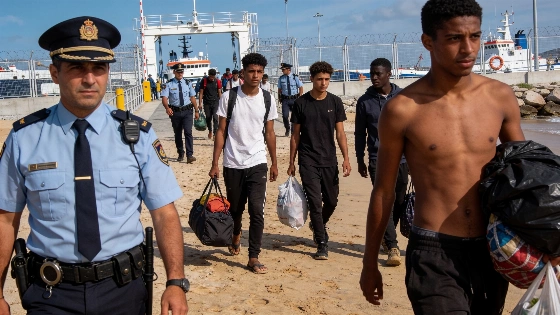
Authorities in Ceuta are relocating migrants from makeshift beach camps to a port facility, aiming for safer and more organized conditions. The move comes amid legal rulings and European Parliament pressure on Spain and Morocco.
Authorities in Ceuta have started moving migrants from improvised camps on the city’s beaches to a facility at the port. The shift is meant to bring more order and security to a situation that has drawn national and international attention.
The relocation comes as Ceuta faces increased scrutiny from both Spanish courts and European institutions. The European Parliament recently issued a warning to Rabat, highlighting the wider diplomatic stakes. At the same time, Spain’s Audiencia Nacional has upheld the legality of the port camp, giving local authorities a legal basis for their approach. According to Reuters, police escorted more than 800 migrants from the beaches to the new port facility after a mass crossing from Morocco.
The port facility in Ceuta covers approximately 16,000 square meters, with reported capacity estimates ranging from 1,000 to 1,700 people, which has fueled legal and political debate.
Officials say the move is designed to make it easier to manage arrivals and to provide safer, more controlled conditions. The Spanish Ministry of Transport has taken over parts of the port, while the Interior Ministry has stepped up security to protect key infrastructure, according to Spanish and international media.
The situation remains uncertain, but authorities are trying to balance the needs of migrants with the need to maintain public order. The port now serves as the main site for processing new arrivals, replacing the makeshift camps along the coast. The Audiencia Nacional had briefly halted the port camp project after a police union raised security concerns, but allowed it to continue after reviewing additional information, according to court and media reports.
Managing migration in Ceuta is complicated by the city’s location at the edge of Europe and Africa. The issue has become a test case for border control, humanitarian obligations, and cooperation between Spain, Morocco, and the European Union. On September 17, 2026, the European Parliament adopted a resolution calling for stronger protection of the EU’s external borders and faster cooperation between Spain and Morocco on returning people who arrived during the late July mass crossing.
The European Commission has emphasized Morocco’s role in swiftly returning most of the recent arrivals, but thousands remain in Ceuta, including over 2,000 unaccompanied minors. Official estimates warn that maintaining the port camp until 2027 could cost up to €600 million, with reduced port operations potentially resulting in losses of around €147 million.
How Ceuta handles this influx may influence future responses to similar migration surges. With legal backing and political oversight, authorities are aiming for a more stable way to manage arrivals. The port’s role as the new center of operations will be closely watched by both policymakers and local residents.