Spain’s car industry stands at a crossroads as Chinese manufacturers move in and historic brands like SEAT face possible extinction. The country’s factories are shifting from European to Asian control, raising questions about jobs, technology, and Spain’s role in the global automotive race.
Volkswagen’s possible plan to end the SEAT brand by 2029 has rattled Spain’s auto sector. The German company, which took over SEAT in 1986, is now looking at deep cuts. Up to 100,000 jobs could be lost. European production could shrink. Still, Volkswagen says it has not made a final call. The company points to market demand, new rules, and the wider economy as key factors. For now, Volkswagen insists its Spanish operations and jobs are not at risk.
SEAT is not alone. Stellantis and Renault are also under pressure. Chinese rivals and a messy switch to electric cars are eating into profits. The biggest threat for SEAT, according to a recent Catalan parliamentary push, is not a sudden shutdown. It is the lack of new models for its factories. Right now, the Martorell plant builds the Ibiza, Arona, and León. These models make up about 199,000 of the 500,000 cars the plant hopes to produce in 2026. The Catalan parliament wants a long-term rescue plan. Ideas include government investment and guarantees for local research and management. So far, these ideas have been turned down.
Direct employment in Spain's automotive manufacturing sector fell to 53,943 in 2025, a 36.1% drop compared to 2019, with 3,246 jobs lost in 2025 alone.
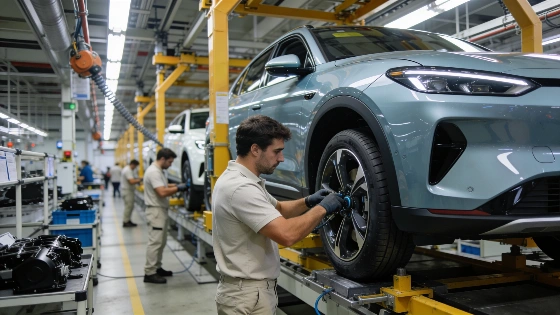
While Europe’s carmakers pull back, China is moving in. SAIC Motor, which owns MG, picked Ferrol in Galicia for its first European plant. The plan is to build the new MG2, a fully electric car, in Spain. This would help SAIC dodge EU tariffs and sell straight into Europe. But the deal is not done yet. Xunta de Galicia says talks with SAIC are still ongoing. The exact model for Ferrol has not been confirmed. At first, the plant will use a CKD setup. Cars will arrive in parts from China and be put together in Spain. Full manufacturing is not on the table yet. Chinese firms have already started five assembly projects in Spain. Most are joint ventures with European partners. They use old or underused plants. For Spain’s struggling car sector, these deals are a lifeline.
Spain’s car industry has always been shaped by outsiders. The SEAT 600, once the car for everyone, was built in Barcelona but designed by Fiat in Turin. Spain offered cheap labor and a closed market. The know-how stayed abroad. This pattern kept repeating. FASA built Renaults in Valladolid. Citroën set up shop in Vigo. Ford came to Valencia in the 1970s after Spain relaxed its rules to attract foreign money. The Pegaso Z-102, a Spanish sports car that broke speed records in 1953, was a rare exception. Most of the time, foreign designs ruled.
SAIC has already begun searching for local suppliers in Galicia and northern Portugal, holding meetings with the Portuguese industry association AFIA and expressing intentions to expand its local manufacturing base. However, much of the Chinese investment in Spain remains at the negotiation or planning stage, and the full integration of local supply chains is still uncertain.
By 2000, Spain was making over three million cars a year. That did not last. Since then, almost 22,000 jobs have disappeared. Output is down by a quarter, ANFAC reports. Spanish factories have always depended on decisions made in Paris, Wolfsburg, Detroit—and now, Beijing. There is a new twist. Chinese companies are not sharing their technology with Spanish suppliers. Their main goal is to avoid tariffs. They ship car kits from China and assemble them in Spain. This keeps Spain as a "white label" factory for others.
Spain leads Europe in productivity. Each worker builds fifteen cars a year. But this comes at a price. Wages in the sector average 22 euros an hour. In Germany, it is 51. In France, 36. After the 2008 crisis, Spain doubled down on cheap labor. Wages froze. New hires got less. Flexible hours became standard. This kept plants open. But it locked Spain into a model where low pay and short-term deals are the norm.
Now, Spain is not fighting Germany or France. It is up against Morocco, Slovakia, and Turkey. But China is the real game-changer. Its cheap electric cars have flooded the world. In 2025, Spain’s car trade balance hit its worst point since 2009. Production and exports slowed. Chinese imports soared. European brands lost ground. ANFAC says that in the first four months of 2025, Spanish car production dropped 9.2%. Exports fell 11.7% from the year before.
The EU hit back in 2024. It raised tariffs on Chinese electric cars to as much as 45%. The reason: huge state subsidies in China. Now, the EU is looking at even tougher rules. The new Industrial Acceleration Law would tie subsidies and public contracts to cars built in Europe. At least 70% of the car must be made locally. Foreign ownership cannot go above 49%. This would not ban Chinese cars. But it would cut them off from the subsidies that make electric cars affordable.
China’s plan is simple. Keep the best technology at home. Export car kits for final assembly abroad. Bloomberg reports that Beijing has told its carmakers to make key parts in China. Only the last steps should happen in Europe. Promises to work more with local suppliers are still vague. No clear deadlines have been set.
China is also ready to use its grip on clean tech. In October 2025, its Ministry of Commerce proposed limits on battery tech and materials. This included machines needed for Spain’s new gigafactories. A trade truce with the US put the plan on hold. But Beijing has not dropped the idea.
Brussels wants to turn the tables. In the 1980s, Volkswagen entered China through joint ventures. It shared technology to get access to the Chinese market. China learned fast. Now it makes a third of the world’s cars and three-quarters of its electrics. But Beijing’s strategy is different. It wants to control green tech, from mining to solar panels and batteries. The most valuable know-how stays in China.
Spain faces a clear risk. The country could become a maquila—a low-cost assembly line for Chinese parts shipped from Shanghai. Finished cars would be sold across Europe, tariff-free. This is the same role Mexico plays for the US. China is offering Spain the same deal.
The Spanish car market is changing too. As reported earlier, Madrid has seen a boom in used car sales. The rest of Spain is not keeping up. This shows how new car production is uncertain. Foreign competition is shaping what people buy.
Cars still make up 10% of Spain’s GDP. The country is Europe’s second-largest car producer. But the real decisions are made far from Madrid or Barcelona. Spanish factories are more productive than ever. Yet the value and technology are controlled from abroad. Unless Spain and Europe secure real investment in local supply and tech, the country could end up as just an assembly outpost. The story from the SEAT 600 to the MG ZS is clear. Spain’s industrial fate has always been decided elsewhere. Now, those calls are coming from Beijing.