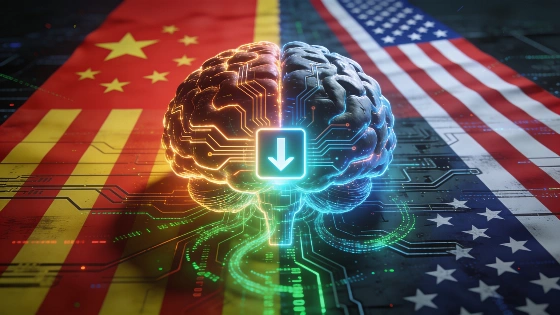
Moonshot, backed by Alibaba and Tencent, has introduced Kimi K3, a 2.8-trillion-parameter AI model. The open-source release is set for 27 July. The move signals a shift in global AI competition and regulatory dynamics.
China's Moonshot has announced the launch of Kimi K3, a new artificial intelligence model with 2.8 trillion parameters, positioning it as a direct competitor to leading US-developed systems. The company plans to release Kimi K3 as open-source on 27 July, allowing developers worldwide to download, run, and adapt the model for their own needs. This marks the first time a model of this scale will be freely accessible, challenging the dominance of proprietary systems from OpenAI and Anthropic.
The timing of Moonshot's announcement is notable. It comes shortly after the US government temporarily forced Anthropic to withdraw its advanced Fable and Mythos models over cybersecurity concerns, underlining Washington's view of frontier AI as critical national infrastructure. Although those restrictions have since been lifted, the episode highlights the growing regulatory scrutiny around advanced AI technologies in the US. In contrast, Moonshot's rapid progress suggests Chinese firms are finding ways to advance independently, despite ongoing US export controls on high-end hardware.
Moonshot, which counts Alibaba and Tencent among its major backers, describes Kimi K3 as its most advanced flagship model to date. Unlike closed American systems, Kimi K3's open-source nature enables global users to modify and deploy the model for complex reasoning, coding, and engineering tasks. According to third-party evaluations by Artificial Analysis and Arena.ai, Kimi K3 performs on par with leading US models such as GPT and Claude, and even outperformed Anthropic's Fable in blind human-preference tests for web interface engineering.
The release of Kimi K3 has already impacted the market. Shares of Chinese AI competitors Zhipu and MiniMax dropped sharply in Hong Kong, falling by approximately 27% and 16% respectively after the announcement. While the model's size means significant computing resources are required to run it locally, its open-source status could disrupt the commercial strategies of Silicon Valley firms that rely on closed platforms.
Kimi K3 is designed to operate with minimal human supervision, supporting sustained tasks in software development and engineering. Its arrival signals a narrowing gap between Chinese and American AI capabilities, challenging long-held assumptions about technological leadership in the sector. The move also raises questions about the future of global AI regulation, as open-source releases of this scale may complicate efforts to control the spread and use of advanced models.
For context, the number of parameters in an AI model is a key indicator of its complexity and potential performance. Until now, the largest open-source models have been significantly smaller than Kimi K3. The decision to make such a powerful system freely available could accelerate innovation but also intensify debates over security, ethics, and control. As the global AI landscape evolves, the release of Kimi K3 may prompt both opportunities and new regulatory challenges, with implications for technology policy far beyond China.