Xpeng Launches the First Chinese Robotaxi in Spain — Tesla Lags Behind. Xpeng has unveiled its first robotaxi in Spain, based on the GX SUV with Level 4 autonomy. The Chinese company plans to start pilot passenger services within this year, while Tesla remains at the testing stage. The new launch promises to shake up the urban transportation market.
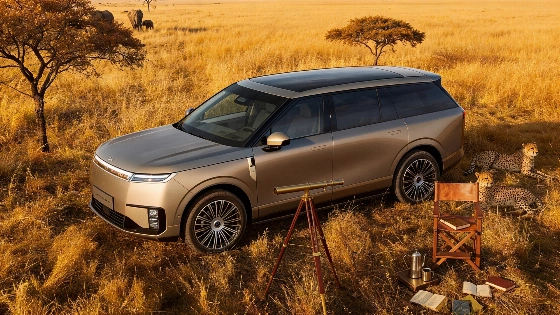
Chinese company Xpeng has officially launched its first robotaxi on the Spanish market — the autonomous GX SUV, which is set to become a direct competitor to Tesla in the driverless transport segment. The manufacturer is betting on its own technologies and aims to secure a significant position among new players, including BYD and MG.
Unlike Tesla, Rimac, and Geely, which are developing robotaxis from scratch, Xpeng is using its existing GX platform — the most advanced in its lineup. This vehicle has become the basis for the driverless version, designed for five, six, or seven passengers. It is not yet specified whether the European version will retain the company's signature Chinese 'range extender,' but it is known that the model is targeted at urban transportation and is intended for intensive use.
Technical details are still under wraps; however, it is known that the GX will feature four proprietary Turing artificial intelligence chips with a total performance of 3,000 TOPS and electronic steering. Unlike most competitors, Xpeng has abandoned LiDAR and HD maps in favor of cameras and an advanced neural network for analyzing road situations.
The autonomous driving system is declared as Level 4 — this means the vehicle can operate without driver intervention in most scenarios. However, as with Tesla, an operator will initially be present in the cabin, ready to take control in case of emergencies. According to the company's plan, fully driverless transport with no one behind the wheel could begin as early as the start of 2027.
The first GX trials in robotaxi mode have been taking place on Chinese roads since January, while in Spain, pilot operations are set to launch in the second half of this year. If the project proves successful, Xpeng expects to rapidly scale up the service and move into the mass urban transport market.
Interestingly, Xpeng is outpacing Tesla not only in terms of launch timing but also in its approach to architecture: the Chinese company is focusing on platform flexibility and in-house computing power, while the American brand continues testing its solutions in a limited mode. In this context, it's worth recalling how other manufacturers—such as Kia—are also actively bringing new models to the Spanish market, with an emphasis on modern technologies and hybrid solutions. Find out more about these trends in the article on the new Kia K4 for Spain.
The arrival of the Xpeng GX on Spanish roads could mark an important milestone for the entire market: if autonomous transport demonstrates its effectiveness, competition between Chinese and Western brands in Europe will only intensify. For now, Xpeng is betting on technological leadership and a quick launch of the service, while Tesla is forced to catch up.