Chinese brands are rewriting the rules in Spain’s car market. BYD has doubled its sales, Ebro has tripled, and electrified vehicles now account for over a quarter of new registrations. Traditional giants are losing ground.
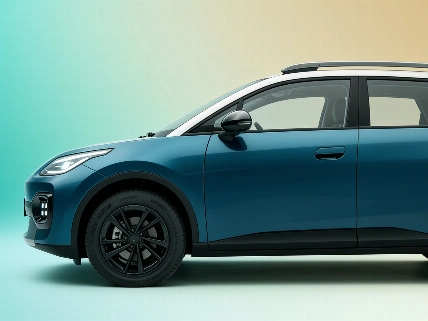
BYD and Ebro have upended Spain’s car market, posting sales numbers that would have seemed unlikely just a year ago. BYD has already doubled its registrations compared to last year, and Ebro has tripled its total, forcing the industry to face a new reality: Chinese automakers are no longer on the sidelines—they’re climbing the rankings fast.
August’s figures make the shift clear. The Spanish market registered 68,544 new passenger cars, up 11.8% from last year, making it the strongest August since 2019, according to ANFAC and industry publications. But the bigger story is who’s selling. Electrified vehicles now account for more than a quarter of all new cars, a jump driven in large part by Chinese brands. In August alone, 18,967 electrified vehicles were sold, making up 27.7% of the market.
In the first half of 2026, BYD registered 172,964 vehicles in Europe, marking a 145% year-on-year increase.
Toyota still leads the pack with 71,555 units sold so far this year, widening its lead over Volkswagen and Seat. Volkswagen, Seat, Renault, and Kia round out the top five, but their hold is slipping as Chinese brands post record growth. Sector analyses confirm Toyota’s clear lead in August, with Volkswagen and Seat following behind.
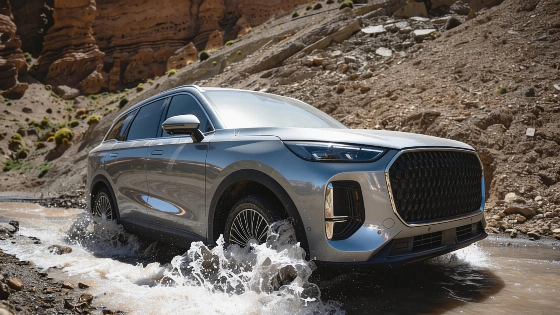
BYD’s 29,947 units represent a doubling of its market share, and Ebro’s 17,990 sales are three times what it managed by this point last year. Omoda has also doubled its registrations to 16,369, and Jaecoo is up 55.5% with 9,100 units. These aren’t small gains—they’re a direct challenge to the established order. While the rapid growth of Chinese brands is widely reported, not all specific figures for Ebro, Omoda, and Jaecoo in Spain for August are independently confirmed in the latest official reports.
Meanwhile, the established brands are losing ground. Ford’s registrations have dropped by 32%, down 6,700 units from last year. Hyundai is down 17%, Renault 13.7%, Nissan 12.5%, Dacia 6.4%, and Citroën 4.4%. The trend is clear: momentum has shifted, and traditional brands are struggling to keep up.
Omoda and Jaecoo have also shown remarkable growth in Europe, with combined registrations reaching 124,280 vehicles in the first half of 2026—an increase of approximately 224% over the previous year. Ebro, another emerging player, posted a 277% rise in European registrations during the same period.
Industry insiders point to the government’s Plan Auto + as a key factor, fueling the surge in electrified vehicle sales and helping the sector recover from the pandemic’s impact. After a 40% drop in 2020, the market has rebounded, with 818,201 new cars registered so far this year—a 6.3% increase over 2025. Some now believe Spain could break the million-car mark again by 2026.
Félix García, communications and marketing director at Anfac, described the mood: “August has been a good month with double-digit growth and a 6.3% cumulative increase, bringing us closer to surpassing 1.2 million cars sold. All channels—private, corporate, and rental—are growing, which signals a healthy market.”
Spain’s car market isn’t just recovering; it’s changing. Electrification is now a reality, and Chinese brands are at the center of that shift. The old hierarchy is under pressure, and the pace of change is picking up.
The rise of new players isn’t limited to passenger cars. The recent return of the Mitsubishi Montero 2027, with its focus on diesel power and true 4x4 capability, shows that even established names are rethinking their strategies as consumer demand and regulations evolve.
Spain has become a testing ground for the future of mobility. The numbers are clear: Chinese brands are setting the pace. As electrification accelerates and consumer preferences shift, the established brands face a choice—adapt or fall behind. The Spanish market, once predictable, is now wide open, and the winners will be those who move quickly and adapt to the new rules.