Chinese car brands have seized nearly 15 percent of Spain’s auto market in 2026, with MG and BYD leading a wave of new models and fierce competition. The landscape is shifting fast as local and global players adapt to the new reality.
Four years ago, Chinese cars were rare on Spanish roads. That’s changed. In 2026, MG and BYD have pushed Chinese brands to the front of Spain’s auto market. Together, they now make up more than 80 percent of all Chinese car sales in the country. Traditional automakers are scrambling to keep up.
Back in 2022, Chinese brands held just 2.7 percent of the market. Now, in the first eight months of 2026, their share has jumped to 14.5 percent. Nearly 120,000 new Chinese cars have hit Spanish streets. The change isn’t just about numbers. Dozens of new models and brands are fighting for Spanish buyers. Industry reports using official registration data confirm this surge. Several independent sources back up the scale and speed of the shift.
Omoda and Jaecoo, two brands under Chery, together surpassed their total 2025 registrations in just the first eight months of 2026, reaching 25,465 units and about 3.1% of the Spanish passenger car market.
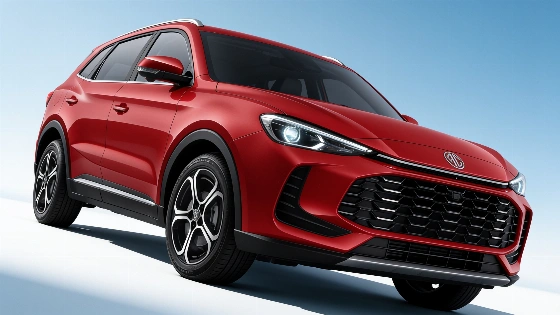
MG leads the field with 31,356 registrations so far this year. Its growth has slowed a bit, down 1.7 percent from 2025. Still, MG’s lineup is unmatched. The MG3 hybrid starts at 17,340 euros. The range stretches from gasoline to electric: the MG4, the plug-in S9, and the Cyberster convertible. MG is the only Chinese brand in Spain with every major powertrain. That gives it a clear edge in a market still split over engine types. Concesionariosonline points out that MG’s broad lineup is a big reason for its lead among Chinese brands.
BYD is catching up fast. Sales have soared 111.2 percent to 29,950 cars. The Dolphin Surf starts at 24,490 euros. The Seal sedan begins at 34,455 euros. BYD now sells electric and hybrid versions of the Atto 2, Atto 3, Seal U DM-i, Sealion 7, Tang SUV, and the plug-in Shark pickup. Denza, BYD’s premium brand, has joined the race with the D9 minivan (from 78,500 euros), the Z9GT shooting brake, and the BAO 5 plug-in SUV with 544 CV. According to 20minutos and La Información, BYD’s growth is outpacing most rivals. In some European countries, BYD has even outsold Tesla in monthly EV sales.
Chery is taking a different approach. Its Omoda and Jaecoo brands offer gasoline, electric, and hybrid SUVs. Ebro, a Spanish brand using Chery tech and building cars in Barcelona, has shot up to 17,992 sales—a 208 percent jump. The S700 HEV and S900 plug-in hybrid (400 CV) are now key choices for families and fleets. Ebro’s rise is tied to its local assembly in Barcelona. Electromovilidad24 calls Ebro a symbol of the new Chinese wave in Spain.
The rapid expansion of Chinese brands in Spain mirrors a broader European trend: in 2026, Chinese automakers have reached double-digit market shares in several European countries, with BYD at times surpassing Tesla in electric vehicle sales, according to independent August reports.
Lepas, Chery’s newest brand, is already selling the L8 plug-in hybrid. The L6 EV and L4 EV (450 km range) are due in early 2027. Exlantix, a premium electric brand, is also set to arrive in 2027. The expansion isn’t slowing down.
Geely, owner of Volvo and a major Lotus shareholder, has launched its own brand in Spain. The E5 electric SUV (218 CV, 475 km range), Starray EM-i plug-in (262 CV, 1,055 km total range), and the urban E2 (345 km) are now available for reservation. Zeekr, Geely’s premium arm, is pushing the 001, X, 7X, and 7GT. Lynk & Co has dropped its subscription model and now focuses on the 01 plug-in, 02 electric (445 km), and 08 plug-in hybrid.
Other brands are moving in quietly. Leapmotor, backed by Stellantis, targets budget buyers with the T03 city car and B10 (from 27,300 euros). Xpeng is after tech-focused drivers with the G6, G9, and P7+ sedan. Changan’s Deepal brand has launched the S05 and S07 electric models, both with a seven-year or 160,000 km warranty.
GWM arrived in June. It offers the ORA 5 (hybrid and electric), Haval H7 plug-in (up to 435 CV), and Jolion Max. GAC, through Grupo Invicta, is bringing in the Aion V (204 CV, 510 km, from 37,995 euros) and Aion UT (430 km). Dongfeng, Voyah, SWM, BAIC, DFSK, and Livan are also present, each with their own mix of electric, hybrid, and gasoline models. Their sales are still small compared to the leaders.
Some brands barely register. Maxus, Seres, Hongqi, and Skywell have only a handful of cars in showrooms. Their registrations are still negligible.
Despite the growing list, the market is tightly packed at the top. MG, BYD, Omoda-Jaecoo, and Ebro together account for over 104,000 of the nearly 120,000 Chinese cars registered this year. The rest are still building dealer networks and working to prove their cars’ reliability. Several industry publications report that this concentration shows just how much a few aggressive brands are shaping the market right now.
For buyers, things aren’t simple. The Plan Auto+ leaves out many China-made models from incentives. That means sticker prices often depend on brand discounts. It’s crucial to compare final costs, warranty terms, and service options before buying.
Spain’s car market is now a battleground. Chinese brands aren’t just here—they’re setting the pace. MG and BYD are rising fast. Chery’s lineup is growing. Newcomers like Geely and Leapmotor are forcing established brands to rethink their strategies. As reported earlier, pre-pandemic sales levels have returned, but it’s the new players driving the numbers, not the old guard.
The facts are clear. Chinese automakers have moved from the sidelines to the center in Spain. They’re changing what buyers want and how the industry responds. More brands and models are coming. Most sales are still in the hands of a few big players. The next phase will show if these newcomers can keep up the pace or if the market will split as competition heats up. For now, the numbers say it all. The era of Chinese cars in Spain is here. Everyone else has to catch up.