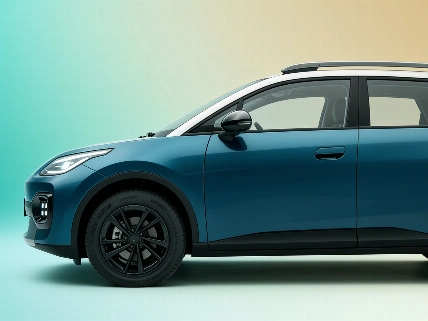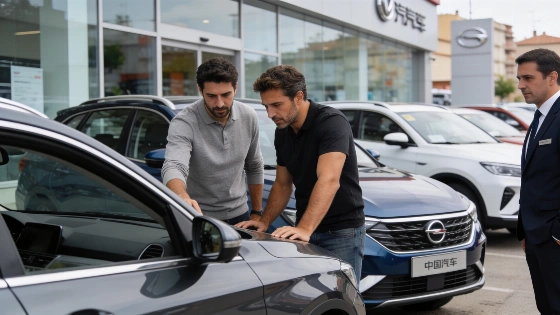
Spain is now the first country in Europe where all seven top Chinese car groups have set up their own subsidiaries. With low prices and a fast-growing dealer network, these brands are shaking up the Spanish car market.
SAIC Motor, BYD, Geely Auto, Chery, Changan, GAC, and GWM have all set up shop in Spain. Each now runs its own local subsidiary. This is the first time all seven of China’s biggest carmakers are competing side by side in a European country. Their goal is clear: they want to grab 30% of private car sales in Spain soon.
The Geely E2, China’s top-selling car, has just arrived. GWM has launched the Ora 5. These moves mark the last stage of a wave that has brought 37 Chinese car brands to Spain in five years. Only about 20 of those brands sell cars regularly, but the big seven are leading the charge. They use their size and government support to take on the established brands.
According to industry data, Chinese-origin brands registered nearly 120,000 passenger cars in Spain from January to August 2026, capturing 14.5% of the market—up from just 5.5% in 2023.
Why now? China’s car market at home has stalled. Demand is flat, factories are making too many cars, and a price war is cutting profits. So Chinese carmakers are looking abroad for growth. Spain is the fourth biggest car market in Europe and third in the EU by sales. Spanish buyers are known for switching brands and caring about price, which makes the country a prime target.
Chinese brands already hold 15% of Spain’s new passenger car market. Among private buyers, their share has jumped to 20%. Next year, they want to break 30% in the private channel. Private sales make up almost half of all car sales in Spain.
Industry reports highlight that MG, BYD, and the Omoda/Jaecoo group account for about 90% of Chinese brand registrations in Spain during the first half of 2026. This concentration underscores the dominant role of these three groups in shaping the Chinese automotive presence in the Spanish market.
SAIC Motor was first out of the gate. It launched MG Motor España in early 2021. MG now has nearly 100 dealerships and has sold over 25,000 cars. In 2026, MG passed 32,000 units sold and offers more than 10 models. It is the top-selling Chinese brand in Spain.
BYD came next in 2023. It quickly built a network of 107 official dealerships and aims for 130 by the end of 2026. BYD has already registered almost 31,800 vehicles this year. The brand’s growth has been fast and wide.
Chery entered Spain in 2024 and moved quickly with its Omoda, Jaecoo, and Lepas brands. Chery teamed up with Spanish company Ebro to build cars in Barcelona. It now has 115 sales points and sold more than 45,000 cars in 2026. Chery has also set up its European headquarters and an R&D center in Cornellà de Llobregat. This shows it plans to stay in Spain and Europe for the long haul.
Geely and GWM are the newest arrivals. Both launched their own subsidiaries. Geely’s first model for Spain is the Starray EM-i, a plug-in hybrid. GWM has returned with the Ora 5, which comes in electric, hybrid, and petrol versions. GWM plans to launch seven more models by early 2027.
Other Chinese brands are watching Spain too. Leapmotor, Livan, and Xpeng are already here. Avatr, Nio, and Xiaomi’s car division have announced plans to enter Europe. Xiaomi is aiming for the first half of 2027.
Chery’s joint venture with Ebro in Barcelona is a key move. It puts Spain at the center of both sales and manufacturing for the company. The Ebro s900 PHEV is the main model from this partnership. Chery plans to launch more brands in 2027 to strengthen its position in Europe.
For Spanish buyers, the changes are clear. There are more models to choose from, lower prices, and a fast-growing network of dealers and service centers. The MG ZS is still the best-selling Chinese model in Spain. New launches like the BYD Dolphin G DM-i and Jaecoo 8 SHS are heating up the fight in important segments.
Chinese carmakers are pushing hard. European brands now face real competition. The battle for Spanish car buyers is happening now, both in showrooms and on the streets. Leapmotor’s B10 has surged in the electric SUV segment, as reported earlier. This is just one sign of how fast things are changing.
Spain’s openness to new brands and its size as a car market have made it the testing ground for China’s auto ambitions. The numbers tell the story. Chinese brands are not just entering Spain—they are changing it. More models, more factories, and more investment are on the way. The Spanish car market is heading for a major shake-up. Buyers get more choice and better prices. For the industry, the balance of power is shifting, and it is not likely to swing back any time soon.