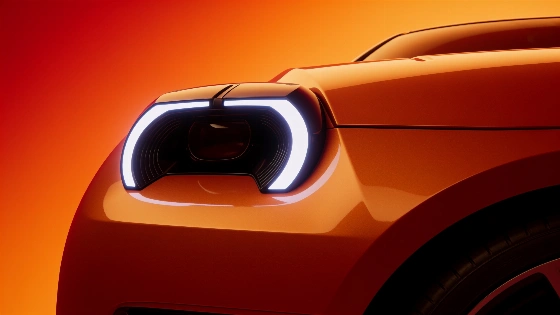
Citroën has released the first official images of its all-electric 2CV, whose design echoes the 1948 original, from its wheel arches to the rear lights. The car is designed to bring back one of Europe’s most famous models in electric form. The full prototype will be revealed at the Paris Motor Show in October.
Since September 30, Citroën has teased fans with daily glimpses of the new 2CV. The photos reveal details of its old-school DNA, including half-moon door handles and vintage wheels. A classic Michelin logo appears on the tires, too. Citroën says these details belong to the concept, so the final production car could look different. It might not reach showrooms until 2028.
Production of the electric 2CV is planned for 2028 at the Pomigliano d’Arco plant in Italy, where the hybrid Fiat Panda is currently built.
Citroën wants electric cars to be simple to use and affordable to own. The company says the new 2CV will carry the spirit of the original: easy to use and cheap to own, with clever design. Built for city life, it will not chase high performance. Independent industry publications report that the 2CV is being developed as a pure battery electric vehicle, with no plans for a petrol or hybrid version, whether mild or plug-in.
Price is basic to the plan. Citroën CEO Xavier Chardon has set a target of about 15,000 euros for the base model, in line with Stellantis’s push for small, budget-friendly EVs in Europe. Compact electric cars have become more expensive because of technical and regulatory demands. The European Union’s new M1E category could help lower prices by relaxing some rules. That could allow the 2CV to return as a people’s car with zero emissions. But, the category is not yet official and has not been used in type certification, leaving its potential effect on the 2CV’s launch uncertain.
The 2CV’s comeback is part of a wider plan: Stellantis is rolling out its E-Car program to develop affordable electric models for several brands. Fiat is next in line, with its own small EV set to sit above the Topolino. The approach echoes cross-brand new idea in earlier car revolutions, including changes brought by the Fiat 600 Multipla, as covered in earlier reports on its impact on family cars.
Citroën has not disclosed basic technical details, including battery capacity. Driving range and power output are also unconfirmed. The company has yet to announce which platform it will use or provide battery and motor specifications. Its focus on cost and city driving points to a modest electric setup, comparable to the Renault Twingo or the new Renault 5. Frandroid and other analysts say the 2CV is aimed at city drivers, not long-distance trips. The lack of confirmed specifications, along with unknowns around safety and equipment compromises, could make the promised price below €15,000 harder to achieve. The final price could also vary with taxes and options, depending on local incentives.
By retaining the original’s look and feel, Citroën is making a statement about the future of affordable cars in Europe. If the production model stays true to the prototype, the 2CV could once again stand for democratic motoring, this time electric.