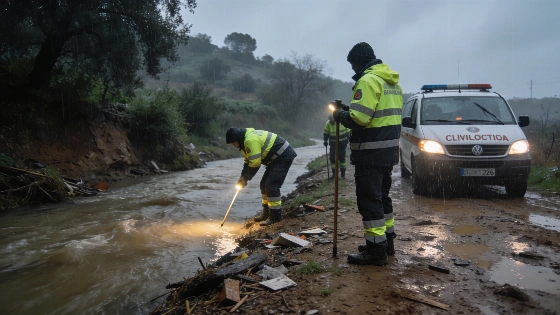
Severe storms triggered ES-Alert warnings across Catalonia. A woman is missing in Olivella after being swept away by floodwaters. Schools in 15 Murcia municipalities are closed due to extreme rainfall risks.
Emergency crews in Catalonia are searching for a woman missing in Olivella, Barcelona, after she was swept away by floodwaters during a night of heavy storms. The incident has added urgency to the region's response as authorities handle a surge in weather-related emergencies.
Within hours, Protección Civil activated the ES-Alert system, sending warnings to mobile phones in the Barcelonés and Maresme areas about hailstones over two centimeters and the risk of torrential rain. Similar alerts soon reached Baix Llobregat, Garraf, Alt and Baix Penedès, and Vallès Occidental as the storm moved along the Barcelona coast. According to Protección Civil and Meteocat, these alerts were issued because of the immediate threat of flash floods and severe weather, not as a routine measure.
The Inuncat flood emergency plan was activated in alert phase across Catalonia, reflecting the official readiness for severe flooding and extreme rainfall.
Joan Ramon Cabello, deputy director of prevention at Protección Civil de la Generalitat, said search teams are focused on Olivella after a report that a woman was carried away while crossing a stream. Cabello explained that she was likely swept away after leaving her vehicle during the overflow. The Generalitat reported 859 calls related to the storm, with 544 separate incidents logged in just a few hours. Meteocat expects the intense rain to continue along the coast for several more hours.
The storms have also affected Murcia, where authorities have closed schools in 15 out of 45 municipalities. The closures impact students and staff in non-university education, vocational training, music conservatories, language schools, and adult education centers. The regional government, led by Fernando López Miras, made the decision after the State Meteorological Agency (AEMET) raised the orange alert for rainfall up to 50 liters per square meter in one hour across the Valle del Guadalentín, Lorca, Águilas, Campo de Cartagena, and Mazarrón. Early care centers, day centers, and social facilities for the elderly and disabled are also closed to reduce travel and protect vulnerable groups, as forecasts predict up to 100 liters of rain in 12 hours in some areas.
President Pedro Sánchez addressed the situation on X, urging people to be cautious and follow official advice as storms continue to create dangerous conditions, especially in Catalunya and the Comunitat Valenciana. His message highlights the need for vigilance as emergency services manage the fallout from the extreme weather.
Meteocat and Protección Civil repeatedly emphasized the risk of hail and sudden flooding, recommending that residents limit movement during the peak of the storms. Hundreds of emergency calls and incidents were recorded within just a few hours, highlighting the operational strain on local services.
Spain's recent weather swings have already forced regional authorities to adapt quickly, as seen in earlier reports from Zaragoza. The current crisis in Catalonia and Murcia shows the pressure on emergency services and the direct impact on daily life, from school closures to disrupted social services. The rapid use of ES-Alert and the scale of the response reflect how seriously Spanish authorities now treat weather threats. Preparedness and fast communication have become essential for public safety as weather grows more unpredictable.