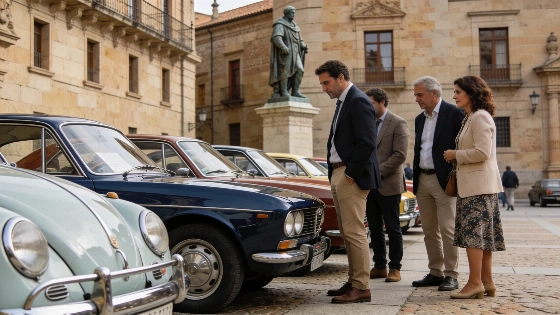
By mid-morning, the Plaza del Concilio de Trento was packed with classic cars for the Rally del V Centenario de la Escuela de Salamanca. Chrome and paintwork gleamed in the sun as the cars lined up beside the statue of Francisco de Vitoria, turning the square into an open-air gallery. People paused to remember.
The rally was more than a car show. These vehicles carried stories: some locals pointed out models they remembered from childhood, while others swapped tales of family road trips on Spain’s old highways. For many, the cars brought back personal memories.
Organizers made their goal clear. These cars belong in museums and in their owners’ daily lives. “It’s a way for automobiles to move through the city, because in Salamanca we also have these ‘monuments’. These cars are part of their owners’ lives: they repair and care for them, then enjoy them,” they explained. The rally’s location, between the Domicos and the famous statue, made the city’s links to ideas and machines clear.
Salamanca’s love for classic cars runs deep. The city counts over 200 club members who keep these vehicles running. Each car shows its owner’s dedication. The Museo de Automoción adds to this with a strong collection that helps keep Salamanca’s automotive past alive.
For many, seeing these cars in the city center was more than a show. It was a reminder of how Spain’s bond with the car has changed. The event echoed points raised in recent coverage about how iconic cars shaped national identity and daily life.
Bringing these cars into the open honored the past and prompted Salamanca to see them as living heritage, deserving respect like the city’s buildings and thinkers. In Spain, the car has long stood for freedom and progress. Events like this show why preservation matters: it is about the stories these vehicles hold, as well as the metal. In Salamanca, history isn’t only carved in stone. Sometimes, it’s parked right on the plaza.