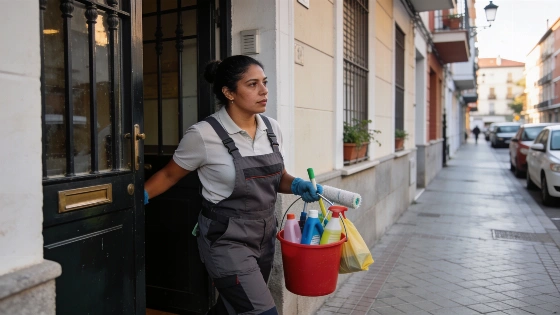
Paulina, a Colombian migrant in Spain, works a 25-hour weekly contract and fills her remaining time with private cleaning jobs. Her routine leaves little room for rest, highlighting the realities many face in the domestic sector. She shares her experience of adapting to a new life and the mental toll of constant work.
Paulina starts her day before sunrise, moving from one home to another across Madrid. With a 25-hour weekly contract that runs from 10:00 to 15:00, she spends her remaining hours cleaning private homes, rarely finding a true day off. Her story, shared on social media, puts a face to the demanding schedules many migrants endure in Spain’s domestic sector.
After arriving from Colombia with her partner, Paulina left behind her previous career as an accounting assistant. She quickly adapted to the realities of domestic work, building a client base for home cleaning while searching for more stable employment. Eventually, she secured a part-time contract through InfoJobs, but this did not replace her private cleaning jobs—instead, it added another layer to her already packed schedule.
On a typical day dedicated to cleaning, Paulina might begin at 7:00 in one home, finish by 9:00, and then head to another job from 10:00 to 14:00. The logistics are tight, with travel time and preparation for each assignment squeezed between shifts. She often works seven days a week, with only a three-week break scheduled each year, though the exact distribution of her shifts remains unclear.
Paulina’s experience is not unique. Many domestic workers in Spain combine multiple jobs to make ends meet, often sacrificing rest and personal time. The physical exhaustion is matched by mental fatigue, as missing a single day of work means losing essential income. The constant comparison to others who seem to progress faster can add to the emotional strain, especially for those far from home.
Her story echoes the challenges faced by others in the sector, where the value of domestic work is often underestimated and the pressure to maximize every available hour is intense. As noted by RUSSPAIN, practical advice for managing household tasks—such as tips to prevent bin infestations—can gain traction among those juggling multiple responsibilities, underscoring the everyday realities behind the statistics.
Legal requirements add another layer of complexity. According to Spain’s Social Security regulations, anyone working in multiple homes must be registered by each employer, regardless of hours worked. This ensures proper contributions but can complicate paperwork for those with several clients. In cases of overlapping jobs, only one day of contributions is counted, even if multiple contracts are active.
Paulina has not disclosed her earnings or the exact number of homes she cleans, but her routine illustrates the balancing act many migrants face: combining formal contracts with informal work, navigating legal obligations, and managing the emotional weight of starting over in a new country. Her story is a reminder of the resilience required to build a life abroad, where every hour counts and rest is a rare luxury.