A company in Cali has launched Plock, a lightweight building block made from recycled plastic and natural fibers. The modular design snaps together without mortar, promising faster, cleaner construction and dramatically lower environmental impact.
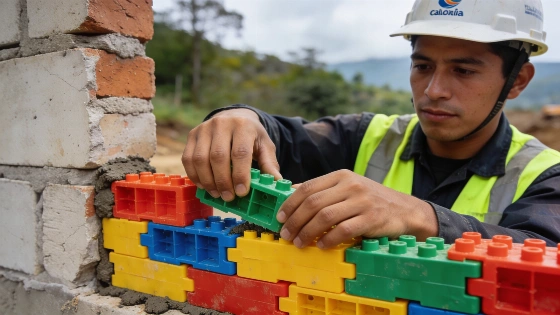
In Cali, Colombia, a new approach to construction is taking shape—literally. Green Solutions, led by Walter Muñoz, has introduced Plock, a structural building block crafted from recycled plastic and natural fibers. Unlike traditional clay bricks, Plock blocks interlock without the need for mortar, plaster, or stucco, offering a streamlined alternative that could reshape how homes and buildings are constructed.
Plock’s modular system is designed for efficiency. Each block snaps into place much like a child’s construction toy, eliminating several steps common in conventional masonry. The blocks’ natural finish means walls can be left exposed or finished with a range of materials, but the need for additional coatings is reduced. This not only saves time but also cuts down on water use and construction waste at the site.
One of Plock’s standout features is its weight. According to Green Solutions, a square meter of wall built with Plock weighs about 21 kilograms—dramatically less than the 173 kilograms of a comparable clay brick wall. This makes transportation and handling far easier, especially in remote or hard-to-reach areas. The company has already delivered blocks to isolated communities along Colombia’s Pacific coast, where access by road is limited and materials must be shipped by boat.
Environmental impact is central to Plock’s pitch. The company claims the blocks reduce carbon footprint by 97% and water usage by 90% compared to traditional bricks, though these figures are based on internal data and should be viewed as manufacturer estimates. By repurposing plastic waste and minimizing construction debris, Plock aims to address both pollution and resource consumption in the building sector.
Durability and safety have also been tested. The Universidad del Valle spent over two years evaluating Plock’s seismic resistance before approving it for structural use. The blocks are designed to withstand earthquakes, offer thermal and acoustic insulation, and resist UV exposure, moisture, and fire. They can be used for load-bearing walls, partitions, and frames, with internal reinforcement and mortar as needed depending on the project’s requirements.
Plock is part of a broader movement toward sustainable construction, joining innovations like concrete made from corn waste and lime, which also seeks to reduce environmental impact and streamline building processes. For those interested in the economic side of recycling in construction, stories such as a Madrid plumber earning €1,588 in a day by salvaging copper pipes during a renovation—detailed in this report—highlight the growing value of reusing materials.
Green Solutions reports that more than 200 homes have already been built using Plock since 2016, demonstrating the system’s viability beyond prototypes. Technical details and available models can be found on the company’s official website. As the construction industry faces mounting pressure to reduce its environmental footprint, solutions like Plock offer a glimpse of how recycled materials and modular design could become the new standard.