The Spanish Congress has imposed another month-long suspension on Vito Zoppellari Quiles’ press accreditation. This move follows repeated serious violations and brings him closer to a permanent ban. The decision also affects another journalist.
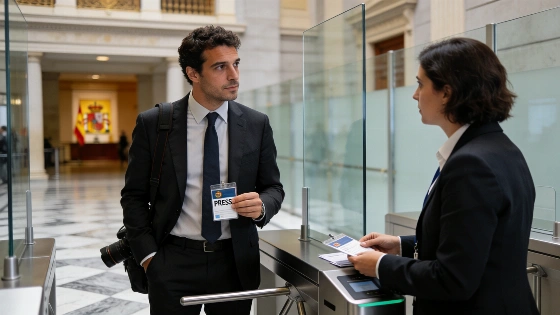
The Spanish Congress has escalated its disciplinary measures against Vito Zoppellari Quiles, adding another month to his suspension from press activities in the lower chamber. This latest sanction, which will prevent Quiles from entering the Congress in September, comes after a series of serious breaches of conduct. According to parliamentary sources, the decision was triggered by an incident on February 10, when Quiles disrupted a press conference held by Ione Belarra, leader of Podemos.
Quiles’ case is not isolated. He faces additional unresolved disciplinary proceedings, and the accumulation of three serious offenses could result in the permanent withdrawal of his press accreditation. The Congress’ governing body has also sanctioned Bertrand Ndongo, suspending his press credentials for a month after he interrupted a press event. This marks the first time the new regulations have been applied to Ndongo.
The February incident involved Quiles bypassing the established order for questions and interrupting Belarra’s appearance, prompting protests from other journalists present. During the exchange, Belarra challenged Quiles over his political affiliations and questioned his participation in a campaign event for the Partido Popular (PP) in Aragón. Quiles denied representing any party, but Belarra accused him of acting on behalf of PP and Vox, raising concerns about transparency regarding his compensation and professional ties.
This confrontation occurred just a week after Quiles took part in the PP’s campaign closing event in Aragón, where he was featured as a guest in a gathering with members of Nuevas Generaciones. The new sanction for Quiles, classified as a serious infraction, follows a previous three-month suspension imposed in May for recording and distributing unauthorized images of former president José Luis Rodríguez Zapatero within restricted areas of the Congress.
The Congress’ governing body, supported by PSOE and Sumar, also applied the Law on Common Administrative Procedure to suspend Ndongo’s credentials after he disrupted a press conference by Sumar’s parliamentary spokesperson, Verónica Barbero. The Partido Popular did not back these sanctions and left the meeting in protest. Notably, these measures do not affect Quiles’ accreditation in the Senate.
The official report concluded that Ndongo’s actions—posing questions without being granted the floor and ignoring repeated warnings—constituted two serious violations under the Congress’ internal regulations. These disciplinary steps reflect a tightening of standards for media conduct within parliamentary settings.
Recent months have seen Spanish institutions take a firmer stance on breaches of protocol and misconduct by public figures. For example, a court in Badajoz recently barred David Sánchez from public office following a high-profile misconduct case, highlighting a broader trend of accountability in Spanish public life.
Press accreditation in Spain is governed by strict rules designed to ensure orderly conduct and protect the integrity of parliamentary proceedings. Repeated violations can lead to escalating sanctions, including temporary or permanent loss of access. These measures are intended to balance freedom of the press with the need for respectful and professional behavior in official settings. The current actions against Quiles and Ndongo underscore the Congress’ commitment to upholding these standards, even as debates continue over the boundaries of journalistic practice and political engagement within Spain’s institutions.