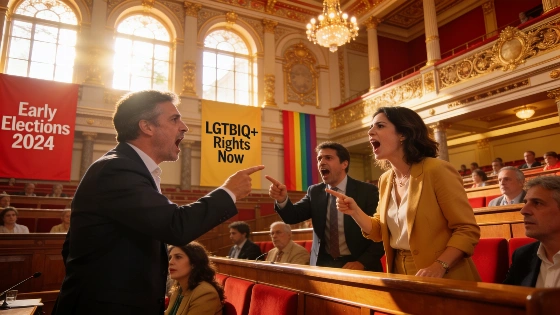
Spain's Congress will vote on a PP motion urging early elections. Lawmakers will also discuss penalties for false LGTBIQ+ conversion therapies and summer travel discounts for youth. The session highlights political tensions and upcoming legal proceedings.
Spain's Congress is set for a decisive session this Thursday, as lawmakers prepare to vote on a motion from the Partido Popular (PP) calling on the government to hold early elections. While the outcome of the vote is not binding and does not force Prime Minister Pedro Sánchez to dissolve parliament, it will publicly reveal the current balance of political support in the lower chamber. The move comes at a time of heightened political scrutiny, with the opposition seeking to test the government's stability ahead of the summer recess.
Alongside the PP's motion, the agenda includes a debate on introducing penalties for so-called false conversion therapies targeting the LGTBIQ+ community. Lawmakers will also consider a proposal to extend travel discounts for young people during the summer months, a measure aimed at supporting youth mobility and tourism. Another significant item is the planned reform of the Congress's internal rules, put forward by Sumar, which seeks to lower the threshold for forming parliamentary groups and give smaller parties a stronger voice in legislative proceedings.
Meanwhile, legal developments continue to draw attention. Jacobo Teijelo, the lawyer representing Santos Cerdán, has been summoned to testify as an investigated party at the Audiencia Nacional. The judge is seeking clarification on Teijelo's alleged involvement in a suspected scheme coordinated by former PSOE member Leire Díez, which reportedly aimed to disrupt police and judicial operations targeting the PSOE or the government. This legal case has already placed pressure on the party's leadership, as highlighted in a recent report on Leire Díez's readiness to testify independently, which could further impact internal dynamics within the PSOE. For more on this evolving situation, see the analysis of Díez's position and its implications for the party's stability in this related coverage.
These developments come as the parliamentary session draws to a close before the summer break. The current legislature has seen frequent clashes between the government and opposition, particularly over issues affecting civil rights and parliamentary procedure. The debate on conversion therapy penalties reflects ongoing efforts to strengthen protections for LGTBIQ+ individuals in Spain, a country recognized for its progressive stance on equality. At the same time, the push for youth travel discounts underscores the government's focus on supporting younger generations and stimulating domestic tourism. The proposed changes to parliamentary group formation could reshape the legislative landscape by enabling greater participation from minority parties. As the session unfolds, attention will remain fixed on both the political maneuvering in Congress and the legal proceedings that continue to test the resilience of Spain's political institutions.