The film 'El último mono' premieres August 7, confronting gender stereotypes with sharp humor. Susana Abaitua and Juan Dávila lead a cast that challenges the 'machosfera' in Spanish society.
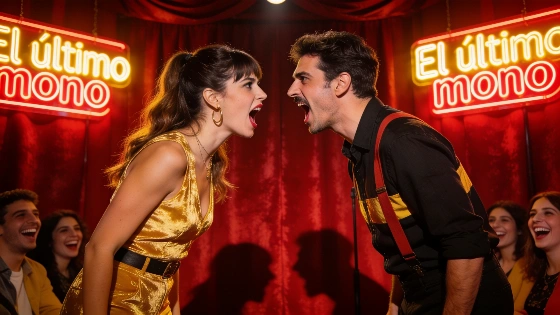
The Spanish film industry is set for a provocative release this August as 'El último mono' arrives in cinemas, promising to stir debate around gender roles and social satire. Starring Susana Abaitua and Juan Dávila, the film positions itself as a bold comedy that directly confronts the so-called 'machosfera'—a term used to describe certain male-dominated online communities and attitudes. The movie, scheduled for release on August 7, has already attracted attention for its unapologetic approach to the ongoing 'war of the sexes' in Spain.
In 'El último mono', Susana Abaitua takes on the role of a feminist comedian, while Juan Dávila plays a self-styled seduction guru. Their on-screen rivalry is designed to lampoon and expose the absurdities of entrenched gender stereotypes. According to Dávila, the film's intent is not just to entertain but to ridicule the extremes of the 'machosfera', a segment of society that Abaitua herself admitted she was previously unaware of, noting that reality often surpasses fiction in its strangeness.
The actors discussed their experiences during a recent appearance on 'Cuerpos especiales', where they shared insights into the film's production and the dynamic between their characters. Abaitua highlighted the support she received from Dávila, whose background in comedy helped her navigate the film's satirical tone. The project also benefited from the input of comedian Charlie Pee, adding further depth to the script's humor and critique.
Producers of 'El último mono' emphasize that the film avoids trivializing its subject matter and steers clear of tired clichés. Instead, it aims for moments of genuine laughter, including a scene featuring a full striptease by Dávila, which the actor reportedly approached with notable seriousness. The film's creators believe that by exaggerating and mocking the behaviors associated with the 'machosfera', they can spark conversation about the persistence of outdated gender norms in contemporary Spain.
While the film's comedic style is expected to divide opinion, its release comes at a time when Spanish cinema is increasingly willing to tackle controversial social issues head-on. This trend mirrors broader shifts in Spanish society, where debates over gender, equality, and representation have become more visible in recent years. The approach taken by 'El último mono'—using humor as a tool for critique—reflects a growing appetite for films that challenge audiences to reconsider familiar narratives.
In the context of Spanish cultural output, the willingness to address sensitive topics through satire is not new, but the directness of 'El último mono' sets it apart. The film's focus on the 'machosfera' aligns with a broader movement in Spain to question and dismantle harmful stereotypes, both in media and public discourse. As the country continues to grapple with issues of gender equality, productions like this one contribute to a national conversation that extends beyond the screen. For those interested in how Spanish society responds to crises and challenges, the recent surge in civic engagement during emergencies, such as the mobilization seen after the Venezuelan earthquake, offers a parallel to the kind of collective reflection prompted by films like 'El último mono'. More on this can be found in the coverage of community-led responses in Venezuela at this detailed report.
Spanish cinema has a long tradition of using humor to address complex social realities. As 'El último mono' prepares for its debut, it joins a lineage of films that use laughter as a means to provoke thought and, potentially, change. The film's reception will likely serve as a barometer for how ready Spanish audiences are to confront the lingering influence of the 'machosfera' and to embrace new perspectives on gender and identity.