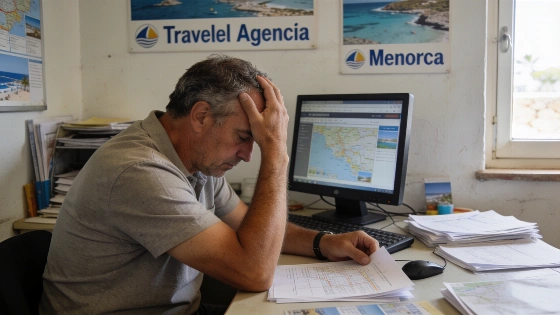
A 54-year-old travel agent in Menorca has been refused permanent disability status. The court ruled he must continue working and only take sick leave during severe episodes. The decision highlights how Spanish authorities handle chronic but variable conditions.
A court in the Balearic Islands has rejected a Menorca travel agent’s request for permanent disability, siding with Spain’s social security agency (INSS). The 54-year-old, who has fibromyalgia and several joint disorders, will have to keep working and rely on temporary sick leave during severe flare-ups instead of receiving a permanent incapacity pension.
The case centers on chronic but unpredictable illnesses. The agent argued that his conditions—including fibromyalgia, joint pain, chronic fatigue, and memory problems—made it impossible to keep up with his job or daily life. He described constant pain, exhaustion, and trouble concentrating, saying these symptoms left him unable to work for long periods.
According to the Spanish Ministry of Inclusion, Social Security and Migration, in 2023 there were over 950,000 people receiving permanent disability benefits nationwide, but only a small fraction of claims related to chronic pain syndromes like fibromyalgia are approved each year.
The INSS and its medical review board (EVI) acknowledged his health problems but concluded they did not permanently prevent him from doing administrative and customer service work. A court-ordered medical report found no lasting cognitive or memory loss that would justify full disability. Instead, the court said he could manage pain with medication and take time off work during bad episodes.
His first application for permanent disability was denied by a local court in Menorca. He appealed, adding new symptoms like burning sensations, tremors, night sweats, and anxiety. The higher court upheld the original decision, stressing that the unpredictable nature of his illness did not meet the legal standard for permanent incapacity in Spain.
This outcome highlights the difficulty of getting long-term support for conditions that come and go. The ruling makes clear that unless a worker’s limitations are constant and severe, authorities expect them to keep working and use sick leave as needed. This approach is similar to other recent legal decisions on social benefits, such as the Supreme Court case on citizenship rights.
A 2022 report by El País highlighted that Spanish courts have seen a steady increase in appeals over disability benefit denials, particularly for conditions with subjective symptoms such as chronic fatigue and fibromyalgia. Experts note that the legal system often relies heavily on objective medical evidence, making it difficult for claimants with variable or invisible illnesses to meet the strict criteria for permanent incapacity.
Spain’s disability system draws a sharp line between permanent and temporary incapacity. Permanent disability is reserved for stable conditions that prevent any meaningful work, while temporary leave covers illnesses that are episodic or may improve. The INSS, now backed by the courts, is cautious about expanding permanent benefits, especially as more people file claims for chronic but unpredictable health problems. For workers with these conditions, the message is clear: unless symptoms are constant and disabling, permanent support is hard to obtain and closely examined.