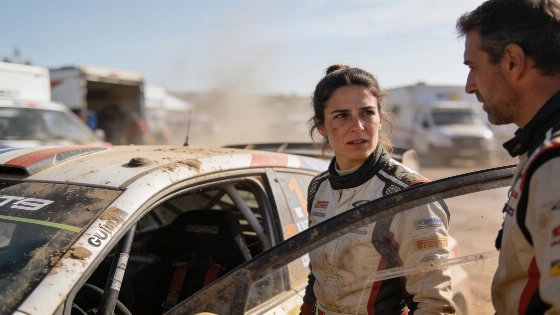
Cristina Gutiérrez, the first Spanish woman to finish the Rally Dakar, in 2017, faced an uncertain future when Dacia withdrew its support this season. She had to rebuild her budget from zero and quickly find new partners, Spanish motorsport outlets reported. Without backing, her racing career could have ended there.
Motorsport is ruthless: every year, drivers like Gutiérrez start from scratch, with nothing guaranteed. “Dacia pulled out, and we had to start again. I cried a lot, but we have to keep fighting,” she said. The pressure is real: money matters as much as skill in this sport. Gutiérrez has spoken about the uncertainty of a rally-raid career and her reliance on outside support.
For the 2026 season, Gutiérrez joined Santana Motors, which gave her a lifeline. The move opened a new phase, with a more compact team structure and a car based on the Century platform. She and co-driver Marc Solà finished ninth overall at Rally de Marruecos, after placing thirteenth on the final day. They finished just over 38 minutes behind winner Seth Quintero. Gutiérrez knew it would be tough. The 2026 Rallye du Maroc was Santana’s first major W2RC event and a basic test for the new project. The team used it to fine-tune the car and its components ahead of Dakar 2027. The field was strong, and even Dakar veteran Carlos Sainz struggled to secure top positions on some stages.
But the results do not capture the full struggle. Gutiérrez has faced battles far from the track, speaking about sleepless nights and early races in battered cars. She also took out a bank loan to keep racing. “You can get there by chance, but the goal is to remain consistent, and that is what is really difficult,” she said. Staying in the game is the hardest part.
She is clear about one thing: gender is not the basic hurdle. “We fight against mindsets, not genders,” Gutiérrez said. The real fight is against old attitudes and rivals on the course.
Her story echoes the struggles other drivers face. Sergio Pérez’s difficulties, as reported earlier, show how one setback can undo months of work.
Gutiérrez started racing karts at nine and saw no other girls on the grid. She hesitated at first, then found a role model in María de Villota. “If she can do it, so can I.” That mindset pushed her through setbacks. Now she faces new doubts about the next Dakar in Saudi Arabia, while organizers work on backup plans amid regional tensions.
Gutiérrez speaks openly about mental health and the need for support, unusual in a sport where drivers are expected to be tough. She does not hide her struggles and refuses to quit. Talent alone is not enough: without money and people who believe in them, even the toughest drivers can be forced out. Her story shows how fragile a racing career can be in Spain right now.