Victims of Valencia's dana reject Carlos Mazón's account and want a credible timeline of what happened. They are demanding responsibility after 232 people died on 29 October 2024.
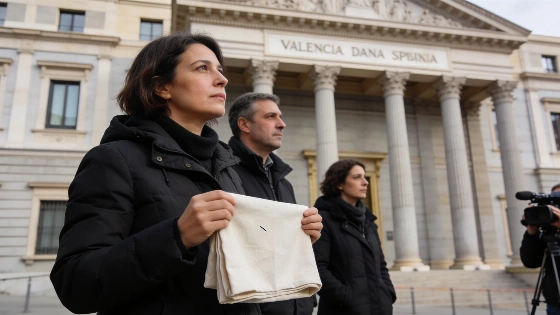
Three associations representing victims and other people affected by the dana demanded responsibility from Carlos Mazón outside Congress on Monday, 21 September 2026. Some protesters called for the former president to be jailed as he appeared before the parliamentary commission investigating the disaster. The tragedy left 232 people dead in Valencia on 29 October 2024.
The protest turned Mazón's second appearance before the commission into a direct clash with families. They say his explanations still do not answer their main question: what happened that day, in a clear and credible timeline? According to Europa Press and other agency reports, the hearing was set for 11:00. It was part of the commission's continuing review of the crisis response.
The Congress commission summoned former emergency secretary Emilio Argüeso to appear on the same date as Carlos Mazón, underscoring that the parliamentary investigation is examining the conduct of several senior officials, not only the former regional president.
Rosa Álvarez, president of the Asociación de Víctimas de la dana 29O, said she expected nothing from the hearing. She accused Mazón of lying from the start. She also criticised the fact that he still holds his parliamentary seat while presiding over a commission that, in her view, rarely meets.
People outside the Cámara Baja repeated the same anger. More than half a hundred protesters called for Mazón to be jailed and described the deaths as killings. The demonstration included a figure of the former president in prison clothes and giant bloodstained hands.
Left-wing parliamentary groups backed the protest. Carmen Martínez of the Socialist Group attended. She also chairs the dana investigation commission. Àgueda Micò of the Mixed Group and Gabriel Rufián of Esquerra Republicana were there as well, among others. Three victims' organisations had announced the demonstration in advance. It took place as Mazón appeared before the commission, according to Euronews and Spanish news agencies.
The scale of the flooding was amplified by exceptionally heavy rainfall. Data attributed to Spain’s AEMET weather agency indicate 200–300 litres per square metre across much of inland Valencia and as much as 772 litres per square metre in Turís over 24 hours.
Mazón told the commission that he would not make a public statement until the judicial investigation into the 29 October 2024 disaster is complete. He said that was the proper course. He began by recalling that the Tribunal Superior de Justicia had decided not to investigate him in the case in which he is also a named party.
That legal position does not settle the political dispute. In an earlier appearance in the lower house, Mazón denied responsibility and said that at 19:43 nobody knew people were drowning. He also said the first knowledge of deaths came well into the early morning. He blamed government agencies for failing to warn people about the scale of the flood.
The families reject that version. Mariló Gradolí, president of the Asociación Víctimas de la dana de 2024, called Mazón negligent and responsible for the deaths. She said it was intolerable that victims had to prove an Es Alert would have saved lives. María Luisa Cerbero García of the Asociación Víctimas y Damnificados DANA Valencia said relatives would never return. She condemned the claim that the victims were going to die anyway.
The families' anger is part of a wider Spanish record of communities dealing with disaster. That subject is examined in La Palma's aftermath. In Valencia, the dispute is more immediate. Victims want a real chronology. Mazón points to the judicial process and continues to defend the emergency response. The dispute has also moved beyond Congress. The Senate has activated its own DANA commission and scheduled more hearings during the same week.
The facts leave political responsibility unresolved. A court decision not to investigate Mazón is not the same as an account accepted by the families or by the parliamentary inquiry. The protest shows that the demand for answers now goes beyond one hearing. It remains tied to the deaths of 232 people. Until the chronology is established in a form the victims consider credible, Mazón's appearance will provide neither closure nor accountability. Based on the evidence presented here, the families are right to reject an account that has not persuaded them.