De Beers will suspend diamond mining at Venetia in South Africa for two years, citing falling prices and the rapid rise of lab-grown stones. The move threatens thousands of jobs and signals deepening challenges for the global diamond industry.
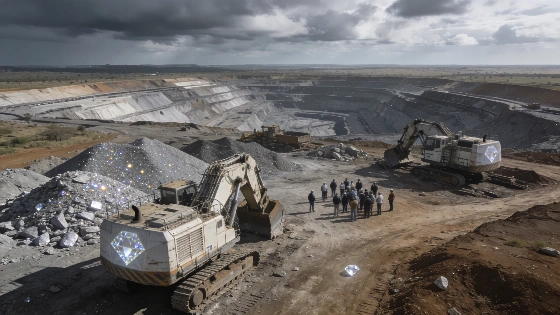
De Beers, the world's leading diamond producer by value, has announced a two-year suspension of mining operations at its Venetia mine in South Africa's Limpopo province. The decision comes as the diamond sector faces mounting pressure from plummeting prices and the rapid expansion of lab-grown alternatives, putting thousands of jobs in jeopardy.
Venetia is a cornerstone of South Africa's diamond industry, accounting for nearly 40% of the country's diamond output and just over 10% of De Beers' global production. In 2025, the mine produced 2.23 million carats and directly employed around 3,500 people, with the total workforce rising further when contractors are included.
Industry Pressures
De Beers attributes the shutdown to persistent difficulties in the rough diamond market. Since 2024, the company has slashed more than $100 million in annual overheads and paused expansion plans at its Gahcho Kué mine in Canada. While there are signs of recovering demand in the US and a modest rebound for higher-quality stones, De Beers expects challenging trading conditions to persist in the near term.
The company will delay some spending on Venetia's underground project but will continue investing in essential infrastructure to maintain readiness for a future restart. Production volumes will be shifted to other operations to keep De Beers' overall output forecast unchanged for now.
Jobs and Local Impact
The National Union of Mineworkers warns that 1,214 permanent jobs are at risk—1,134 at Venetia and 80 at the Johannesburg sorting center. De Beers has not specified how many positions may be lost, as labor consultations are ongoing. The company previously invested $2.2 billion to convert Venetia from an open-pit to an underground mine, aiming to extend its life until 2046.
Lab-Grown Diamonds Disrupt the Market
The diamond industry is being reshaped by the surge in lab-grown stones, which are chemically and physically identical to natural diamonds but produced in controlled industrial settings. According to Boston Consulting Group, global supply of lab-grown diamonds increased more than tenfold between 2018 and 2024, while wholesale prices dropped by over 90% through 2023. These stones are sold at a fraction of the price of mined diamonds, intensifying competition and driving down prices across the sector.
The WWW International Diamond Consultants' rough diamond price index has fallen nearly 50% since its 2022 peak, pressured by weak demand from China, high inventories, and the flood of synthetic gems. De Beers itself entered the lab-grown jewelry market with its Lightbox brand in 2018, but announced its closure in May 2025 to refocus on natural diamonds. The group continues to manufacture synthetic materials for industrial use through its Element Six division.
Ownership Changes and Industry Outlook
De Beers is currently majority-owned by Anglo American, which holds an 85% stake, with Botswana retaining the remaining 15%. Anglo American is in advanced stages of selling its diamond business, having written down the value of De Beers by $2.3 billion in early 2026. The company believes that a reduction in global supply and stronger sales of high-quality stones could support the market in the long term, but maintains a cautious outlook for the months ahead.
The suspension of Venetia's operations highlights the scale of disruption facing the diamond industry as consumer preferences shift and new technologies reshape the market. The future of thousands of workers and the broader South African diamond sector now hinges on how quickly the industry can adapt to these changes.