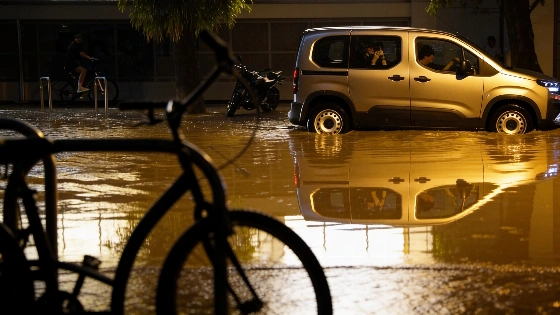
A night of relentless rain has left eastern Spain grappling with flooded streets, a fatality in Barcelona, suspended classes, and a paralyzed metro system. Valencia and Catalonia bore the brunt, with the storm now threatening parts of Andalusia.
Heavy overnight rain in eastern Spain left one man dead in Olivella, Barcelona, after floodwaters swept his car away. Emergency crews found his body about 500 meters from the vehicle. The storm caused widespread disruption across several regions.
Valencia was hit especially hard. The city’s entire metro system shut down as water flooded stations. By late evening, emergency services had responded to 478 storm-related incidents, mostly involving flooded streets, traffic jams, and property damage. Nearly half of these were in Valencia city, with towns like Torrent and L'Eliana also reporting dozens of cases. No other deaths were confirmed in Valencia at the time of reporting.
The Generalitat of Valencia activated a special flood response plan and sent out ES-Alert warnings, while Metrovalencia began gradually suspending service and closing stations as a precaution.
Problems spread to other transport lines. Several Cercanías commuter trains were interrupted: the C3 line was cut between Buñol and Sant Isidre due to signaling failures, the C1 was blocked by a fallen tree near Sollana, and the C2 had delays from electrical issues. Thousands of passengers were left stranded or searching for other ways to get around.
The storm also affected sports. The Levante vs Athletic Club football match at Ciutat de València was called off just before kickoff because the pitch was waterlogged. Players tried to warm up, but the field was unplayable. LaLiga and match officials postponed the game, with a new date still to be announced.
Schools across the region closed in response to the flooding. Carcaixent, l'Alcúdia, Alberic, and a flood-prone institute in Benifaió suspended classes, and Valencia extended closures to rural schools in the south. In Alicante, Elche, Orihuela, and Santa Pola also canceled lessons, with some closures expected to last until mid-afternoon.
According to official reports, 26 schools in the city of Valencia specifically implemented preventive measures, including continuing meal services until 15:00 and moving all outdoor activities indoors after that time. The municipality also suspended classes from 14:00 in flood-risk zones and areas affected by the DANA 2024 storm.
Valencia City Council
Catalonia faced its own emergencies. The Aemet weather agency issued a red alert for Barcelona’s coast, warning of more than 90 liters of rain per square meter in under an hour. Flooding and transport problems hit roads, railways, and parts of the Barcelona metro, with lines L1, L4, and L11 disrupted. During the Barcelona vs Racing de Santander match at Camp Nou, stadium announcements warned fans about metro outages, making it harder for them to leave as rain continued to fall.
The storm moved south as well. In Almería, authorities activated emergency protocols and suspended in-person classes in Pulpí, Huércal-Overa, and Cuevas del Almanzora. Civil Protection sent ES-Alert warnings to residents in orange-alert zones, advising them to avoid unnecessary travel. Forecasts predicted up to 50 liters of rain per square meter overnight in the Levante area of Almería, with further alerts in Jaén, Córdoba, Málaga, and Granada.
As rain swept along the Mediterranean coast, the disruption exposed how vulnerable Spain’s cities are to extreme weather. Emergency services urged people to avoid travel, stay away from flooded areas, and follow official instructions. The situation highlighted the strain on urban infrastructure, similar to the high failure rate of vehicles at Spanish ITV inspections, as reported earlier.
According to Google/SpainAuto, the storm’s impact was immediate and widespread, halting public transport, closing schools, and postponing professional football. The rapid shift from heavy rain to emergency conditions shows the ongoing challenge of adapting Spain’s cities and services to more unpredictable weather. For residents, the advice remains clear: follow warnings and recognize that these disruptions are becoming a regular part of life, not rare exceptions.