Andalusian Authorities Copied Mining Company’s Arguments to Bypass EU Regulations. In Seville, authorities declared mining at Minas Los Frailes as a 'matter of overriding public interest' to circumvent EU regulations. The decision has drawn criticism for duplicating the company’s arguments and posing a risk of water contamination for 1.4 million residents.
The Andalusian authorities have found themselves at the center of a scandal after arguments presented by the mining company itself were used to justify classifying extraction at Minas Los Frailes (Aznalcóllar, Seville) as being 'of public interest.' This status allows them to bypass the requirements of the EU Water Directive and permit the discharge of wastewater into the Guadalquivir River, which has drawn strong criticism from environmentalists and water management experts.
According to documents prepared by the Industry Delegation in Seville, the justification for granting special status to the project almost entirely repeats the mining operator’s arguments. This decision enables the project to disregard European environmental regulations if deemed crucial for the region. However, Spain's Supreme Court has previously overturned similar decisions, demanding independent and detailed justification from the authorities rather than simply echoing the business’s position.
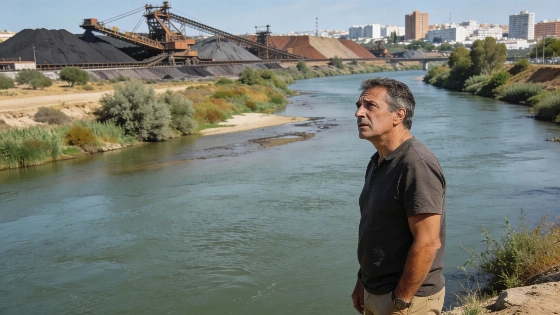
Particular concern has been raised by the fact that waste discharges from Minas Los Frailes and the nearby Mina Las Cruces are planned for the same section of the river where Emasesa intends to build a new €60 million desalination plant. This facility is expected to supply drinking water to 1.4 million residents of Seville and another 12 municipalities in case of drought. Experts warn that the presence of heavy metals—such as arsenic, cadmium, copper, chromium, mercury, nickel, lead, selenium, and zinc—could jeopardize the quality of the population’s water supply.
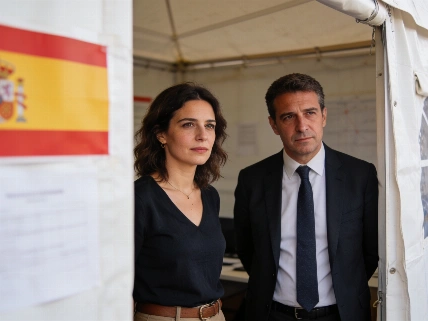
The decision to recognize the project as being of 'public order interest' was signed not by the highest authority, but by the government delegation in Seville, which contradicts the requirements of the Supreme Court. The document lacks an independent expert assessment, and the arguments fully align with the company's position. According to former heads of water agencies, this could be considered a procedural violation and grounds for overturning the decision.
The Andalusian authorities claim that their document is merely a 'review,' and the final decision on water use is made by the Guadalquivir Hydrographic Confederation (CHG), which reports to the central government. However, experts believe that the choice of waste discharge site is not accidental: in the Guadalquivir estuary, the regulations on pollutant content are more lenient than in the Guadiamar River, where the region's largest environmental disaster previously occurred.
CHG, in turn, points out that it is the Andalusian government that must justify the 'public order interest' for mining projects. After receiving this status, CHG approved an exception to EU standards and included it in the hydrological plan following public consultations and agreement with the relevant councils.
Environmentalists and former officials emphasize that draining water from the mine will lower the groundwater level by 300 meters, and the water returned to the river will contain dangerous contaminants. At the same time, discharge into the Guadiamar would be impossible due to stricter requirements, while in the Guadalquivir estuary, the permissible concentrations of pollutants are significantly higher.
The situation is further complicated by the fact that a new water intake station is planned to be built in this area to supply drinking water to Seville and the surrounding areas. Experts note that water purification for drinking quality requires much stricter standards, and even modern technologies do not always guarantee the complete removal of heavy metals. If the project goes ahead, not only urban water intakes will be at risk, but also agricultural fields that use water from the river.
Questions about the quality and safety of water supply in Spain are becoming increasingly relevant in the context of climate change and growing pressure on infrastructure. In other regions of the country, disputes also arise over resource allocation and the environmental impact of industrial projects. For example, a recent initiative to change municipal boundaries in Catalonia was discussed, which, according to local authorities, may affect funding and access to services — you can read more about this in the article about Cerdanyola’s position on the Bellaterra issue.
For reference: Minas Los Frailes was already the cause of a major environmental disaster 28 years ago, when a dam breach led to the contamination of 5,000 hectares of land. Since then, environmental safety regulations have become stricter, yet new projects continue to spark debates between economic interests and environmental protection. The issue of allowing discharges near large cities and nature reserves remains unresolved and requires further public discussion.