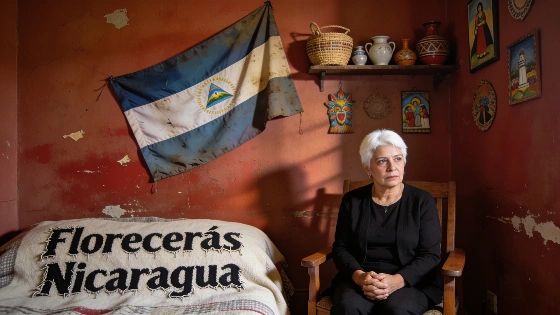
Dora María Téllez, once a Sandinista revolutionary, now lives in exile in Spain. She denounces the Ortega-Murillo regime after Nicaragua's decision to eliminate elections. The move deepens the country's political crisis.
Nicaragua's political landscape has shifted dramatically after President Daniel Ortega announced the elimination of future elections, a move that has drawn sharp criticism from exiled opposition figures. Among the most prominent voices is Dora María Téllez, a former Sandinista guerrilla leader and key figure in the 1979 revolution, who now resides in southern Spain following her expulsion from Nicaragua.
Téllez, once celebrated for her role in the assault on the Palacio Nacional in 1978, now finds herself stripped of her Nicaraguan citizenship and living under the constant threat of reprisals from the Ortega-Murillo government. According to El País, she and her wife, Ana Margarita Vijil, both former political prisoners, have adapted to life in Spain but remain deeply engaged in the struggle for democratic change in their homeland.
The decision to cancel elections, announced on the anniversary of the Sandinista revolution, marks a new phase in Nicaragua's authoritarian turn. Téllez argues that Ortega has effectively become a lifelong dictator, pointing to a pattern of electoral fraud and increasing repression since 2006. She describes the regime as isolated and in crisis, citing recent arrests of opposition figures and purges within state institutions as evidence of internal instability.
For Téllez, the crackdown extends beyond political opponents to their families and associates, with reports of targeted violence against critics even outside Nicaragua. She notes that the government’s actions, including the revocation of professional licenses and the imprisonment of former allies, reflect a broader effort to consolidate power, particularly by Rosario Murillo, Ortega’s wife and vice president.
In her assessment, the regime’s decision to end elections is both a show of defiance and a sign of vulnerability. Téllez highlights Ortega’s declining health and Murillo’s lack of political cohesion as factors that could accelerate the regime’s downfall. She draws parallels with other authoritarian governments in the region, noting that external pressure and internal crises have historically led to significant political change.
Despite the hardships of exile and the psychological toll of imprisonment, Téllez remains committed to her cause. She believes that justice will prevail and that a return to Nicaragua is possible once the current regime collapses. Her experience underscores the broader challenges faced by Nicaraguan opposition members, most of whom now operate from abroad due to the absence of independent media and political parties within the country.
Spain has played a notable role in offering refuge to Nicaraguan dissidents, granting citizenship to Téllez and others expelled by the Ortega government. While Téllez acknowledges Spain’s support, she suggests that the Spanish government could take a stronger stance in promoting democratic transitions in Nicaragua and Cuba.
For context, Nicaragua’s political crisis has intensified since 2018, when mass protests were met with violent repression. The Ortega-Murillo administration has since dismantled democratic institutions, targeted civil society, and forced hundreds of opponents into exile. The latest move to abolish elections further entrenches authoritarian rule and raises concerns about the future of governance in the country. Spain’s involvement as a destination for exiles highlights the international dimension of the crisis and the ongoing debate over how best to support democratic change in Central America.