Madrid’s air quality improved sharply on Monday, even as wildfires burn nearby. The shift is due to easterly winds pushing smoke away from the city. Authorities warn conditions could change if the wind direction shifts again.
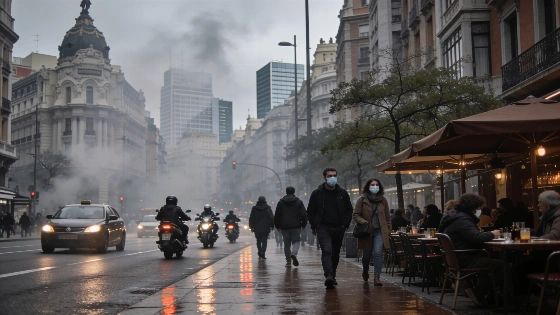
Madrid residents woke up Monday to an unexpected improvement in air quality, despite major wildfires still burning in the Sierra Oeste, Ávila, and Toledo. The city, which just days ago was shrouded in a thick, smoky haze, saw clear skies and pollution levels drop to 'good' or even 'very good' at most monitoring stations. This turnaround is not a technical error, but the direct result of a shift in wind direction, according to the State Meteorological Agency (Aemet).
Javier Armenteros, Aemet’s delegate in Madrid, explained that the wind now blows from the east, carrying smoke and fine particles away from the capital and toward the west. Over the weekend, westerly winds had pushed smoke directly into Madrid, prompting health advisories, recommendations to avoid outdoor activity, and even the use of masks and sunglasses. On Monday, with the wind reversed, the city’s air cleared rapidly. However, forecasts suggest that winds could shift again by Tuesday, potentially bringing smoke back, though likely with less intensity than the previous week.
Air quality data from both municipal and regional sources confirm the improvement. Most stations in Madrid, including Castellana, Plaza de Castilla, Vallecas, and Farolillo, reported 'good' or 'very good' levels for PM₂.₅ and PM₁₀—key indicators of smoke and ash in the air. Only a few locations saw a slight drop to 'good' rather than 'very good.' In the wider region, Collado Villalba also recorded 'good' air, while most other municipalities were rated 'reasonably good.' The exceptions were Villa del Prado, where air quality was 'extremely unfavorable' due to its proximity to an active fire, and San Martín de Valdeiglesias, which remained 'unfavorable.'
Health experts warn that even when smoke is not visible, fine particles like PM₂.₅ can travel long distances and linger in the air, posing risks to sensitive groups such as children, the elderly, pregnant women, and those with chronic respiratory or cardiovascular conditions. Exposure to wildfire smoke can cause eye, nose, and throat irritation, coughing, chest tightness, and difficulty breathing. In severe cases, headaches, dizziness, or even loss of consciousness may occur. The recommended precautions include staying indoors with windows and doors closed, avoiding outdoor exercise during poor air quality episodes, and using properly fitted FFP2 masks if going outside is unavoidable. Surgical masks and improvised coverings do not provide sufficient protection against fine particles.
Madrid’s recent experience highlights how quickly air quality can change depending on wind patterns, even when fires continue to burn nearby. The situation remains dynamic, and authorities are closely monitoring both the fires and meteorological conditions. If the wildfires are brought under control in the coming days, the risk of smoke returning to the city will decrease, regardless of wind direction. For a broader look at the impact of these wildfires on local communities and emergency responses, see this report on how evacuations and public support have shaped the response in Madrid and Ávila.
Wildfires are a recurring threat in Spain, particularly during the dry summer months. The country has invested in early warning systems and firefighting resources, but changing climate patterns and prolonged droughts have made fire seasons more unpredictable. Air quality monitoring networks in Madrid and other regions provide real-time data to help residents and authorities respond quickly to changing conditions. Understanding the interplay between weather, fire, and public health is increasingly important as extreme events become more frequent across the Iberian Peninsula.