Electric cars now make up more than a quarter of new vehicle sales in Spain, driven by a rapid expansion of charging stations. This shift is changing how people travel and what they pay to get around.
Electric cars now account for over a quarter of new vehicle sales in Spain. In August, they reached a 27.7% share of the market—a sharp jump that signals a real change in how people are choosing to get around. This growth is closely tied to the spread of public charging stations and the clear savings compared to petrol cars.
The numbers show how quickly things are moving. The Asociación Española de Fabricantes de Automóviles y Camiones (ANFAC) reports that nearly 950,000 electric vehicles are now on Spanish roads. Of those, more than 202,000 were registered in the first eight months of this year, up 34.8% from the same period last year.
In August 2026, Spain registered a record 18,967 electrified passenger vehicles, setting a new monthly high for the segment.
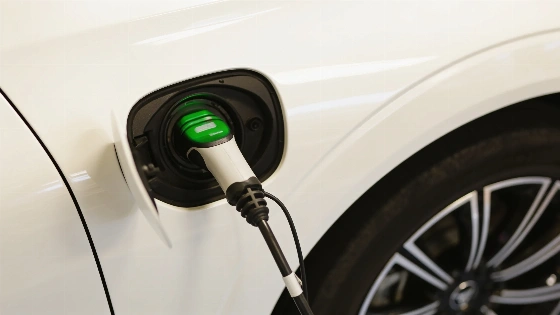
Much of this momentum comes from better infrastructure. Companies like Iberdrola have installed 12,000 high-powered charging points nationwide. Their work with BP Pulse has added 2,000 new stations in the past year and over 4,300 in the last two years. For many drivers, long trips in an electric car are now practical, not just possible.
ANFAC’s Electromobility Barometer shows the public charging network grew by 2.9% in the second quarter of 2026, with 1,605 new points bringing the total to 56,682. Still, about 17,821 of these are out of service, so roughly a quarter of the network isn’t working, according to recent industry reports. Despite the heavy investment, Iberdrola expects its charging business to turn a profit before 2030, suggesting the economics are starting to work out.
There is some variation in how market share is calculated: some sources include only passenger BEV and PHEV models, while others count all electrified vehicles, including commercial and other categories. This leads to reported market shares ranging from 27.7% to 28.2% for August 2026.
The environmental impact is measurable. The current pace of electrification is saving about 30 million liters of petrol each year and cutting around 69,300 tons of CO₂ emissions. These changes are directly linked to drivers choosing electric cars and the companies building the charging network.
For drivers, the cost savings are clear. Charging at home can reduce energy costs by more than 90% compared to petrol. Iberdrola says that with special home tariffs, 100 kilometers can cost about one euro, while the same distance on petrol is over twelve. Public charging is also cheaper: more than 50% savings at low-power points and over 20% at rapid chargers. A 400-kilometer trip, starting with a full home charge, can cost as little as 11 euros versus 51 euros for petrol—even for those who don’t have home charging.
How people use their cars is changing, too. Iberdrola’s mobility app now has over 600,000 users, and two out of three electric drivers use its network. This year, the company expects to supply enough energy for 500 million kilometers of travel, meaning every electric car in Spain could, in theory, cover more than 500 kilometers each. The average user is expected to charge on the road 12 times a year, showing how long-distance travel is becoming routine.
Charging sessions are also more efficient. Urban points usually provide enough power for 150 kilometers, while high-power stations on highways deliver between 250 and 300 kilometers per session. Electric cars are no longer limited to city driving; summer holidays and cross-country trips are now within reach for more drivers.
Spain’s shift to electric cars is part of a wider trend. Affordable models, like the Dacia Spring 2027 highlighted in a recent report, are making zero-emission driving possible for more people. As more charging stations and car options appear, the barriers to entry keep falling.
This moment stands out because technology, policy, and consumer habits are all moving together. The numbers are no longer predictions—they reflect daily life for hundreds of thousands of Spaniards. As the charging network expands and the cost gap with petrol grows, electric cars are becoming the default for those who want to save money and cut emissions. The pace of change suggests Spain’s roads will look very different by the end of the decade.