A fully electric rally car is rewriting the rules in the Canary Islands, challenging old assumptions about speed and endurance. The 'cero emisiones, cero excusas' campaign is not just about technology—it is a statement about the future of motorsport and environmental responsibility.
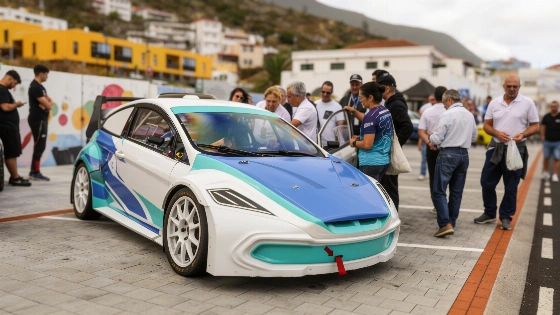
At a recent rally in the Canary Islands, a silent electric car rolled up as the official 'zero car'. Most people expected it to lag behind the gas-powered racers. They were wrong. The 'cero emisiones, cero excusas' project, started by the regional government and the Federación Canaria de Automovilismo, is changing minds fast. ElDesmarque reports this is a joint push to put 100% electric cars right into the thick of rally action as official zero cars.
Old ideas about electric cars being slow or weak do not hold up here. The current Opel-based electric rally car has already finished full rally stages. It recharges with portable chargers during regroupings and service stops. Mariano Hernández Zapata, the Canary Islands' ecological transition councillor, says even veteran drivers have been caught off guard by its performance. "We have shown we can compete head-to-head in a rally, covering the entire mileage," he said. Hernández Zapata told ElDesmarque the main goal is to prove electric vehicles can handle the full demands of high-speed rallying, not just eco-friendly events.
For the next season, organizers are considering launching a dedicated electric cup within the Canary Islands Rally Championship, marking a new chapter for electric motorsport on the islands.
Some drivers who tried the car were shocked by its speed and reliability. Laura Aparicio, a rally driver and Spain's absolute hybrid car champion for 2025, put it simply: "It's wild how that thing accelerates." This project is more than a tech showcase. It takes direct aim at the idea that electrification and motorsport cannot mix. National motorsport figures have backed the effort too. Juan Esteve Aguilar from the Real Federación Española de Automovilismo has voiced support, showing the buzz is spreading beyond the islands.
Plans are already underway for a dedicated electric cup in the Canary Islands Rally Championship next season. The electric prototype took second place at the Subida de El Hierro. It packs over 340 horsepower. That result has given the project even more momentum. Still, not everyone is ready to let go of the old ways. Hernández Zapata admits fans often ask for more noise. He stands firm. The technology is here to stay. It belongs on the starting line.
This campaign is not just about engineering. The 'zero car' changes its look at every event. It doubles as a rolling billboard for social causes. In March, for International Women's Day, it carried the names of all female license holders on its hood. Since then, it has highlighted rural issues, Earth Day, and now backs cancer research with the Asociación Española contra el Cáncer. The car has become a moving symbol of change. It stands out both on the track and off it.
The electric rally car is not just a test vehicle—it already participates in the official calendar of various Canary Islands events, with the region actively combining motorsport and energy transition strategies. Environmental sustainability is also emphasized in the organization of local rallies, such as the 65th Gran Canaria Island Rally, which features a new 61.82 km timed stage.
The Canary Islands are not the only ones betting on electric mobility. As reported earlier, Spain's electric vehicle sector is drawing billions in investment. Energy giants and automakers are racing to adapt. The rally project stands out. It puts electrification to the test in one of the toughest settings—real motorsport.
This initiative does not treat electric cars as a sideshow. They are right in the heart of the rally. The Canary Islands are sending a clear message. Motorsport's future will be decided by performance and adaptability, not nostalgia. The results so far are clear. Electric vehicles are not just ready for the road. They are ready for the podium.