Electric SUVs in Spain are getting smarter and more efficient thanks to over-the-air software updates. Volvo’s EC40 and ES90 prove that a car’s best features might arrive long after you drive it off the lot.
When a Volvo EC40 or ES90 in Spain gets a new software update overnight, the owner wakes up to a car that feels different. It might drive smoother, respond faster, or offer new features—no trip to the dealer needed. This isn’t science fiction. It’s how electric SUVs work today, and it’s changing what it means to own a car.
Over-the-air (OTA) updates are now at the heart of modern electric vehicles. Instead of swapping hardware or booking service appointments, manufacturers send improvements straight to the car through its mobile or WiFi connection. The car keeps evolving—sometimes in small ways, sometimes with big changes—long after it leaves the showroom. The United Nations Economic Commission for Europe (UNECE) now regulates these updates under UN R156. Automakers must use a Software Update Management System (SUMS) to guarantee every update is authentic, secure, compatible, and traceable for the car’s entire life.
OTA updates are now considered an industry standard for managing the software lifecycle of electric vehicles, not just an optional feature.
How OTA Works
OTA stands for Over-The-Air—a term borrowed from smartphones. It means your car’s software can be updated remotely, just like your phone. For electric SUVs, this is a big deal. Nearly every system, from the battery to driver assistance, runs on code that can be rewritten and improved. Risk assessment reports for electric vehicles point out that these updates can touch everything from entertainment to safety-critical systems. That’s why cars need fallback and rollback options, so they can recover safely if something goes wrong during an update.
There are two main types of OTA updates: FOTA (Firmware Over-The-Air) and SOTA (Software Over-The-Air). FOTA updates the firmware that controls things like the electric motor, battery, steering, and regenerative braking. SOTA handles features you see and use—infotainment, navigation, driver profiles. Both matter, but FOTA can actually change how the car drives, while SOTA shapes what you see on the screen. Firmware updates face stricter rules because they affect safety and legal compliance, as shown in certifications like ISO 24089:2023.
What Actually Changes
OTA updates can do more than most drivers expect. Manufacturers can adjust fast charging speeds, fine-tune how the car manages heat, tweak lane assist or adaptive cruise control, and add new infotainment features. Even the way the accelerator responds or how the dashboard looks can change—no tools required. CUPRA, for example, now makes OTA updates a core part of its product strategy, using them to boost safety, add features, and improve the driving experience overall.
This isn’t magic. It’s engineering delivered straight to your car, no appointment needed.
Recent regulatory developments in China and the EU emphasize that manufacturers cannot use OTA updates to conceal defects or bypass recall obligations. This shift means that every update must be documented, verifiable, and, in the event of failure, reversible to a safe state. The move toward formal certification, such as ISO 24089:2023, reflects the industry's commitment to transparent and secure software management.
Real Impact on Performance
Don’t expect an OTA update to turn a 400 km SUV into a 500 km one overnight. But a 3–5% boost in efficiency—by improving battery management or energy recovery—can save real money over 20,000 km a year. That means less time charging and more cash in your pocket. Sector analyses show these small gains are now required for compliance, not just a bonus, and regulators keep a close eye on safety and transparency.
Driver assistance systems (ADAS) also benefit. A lane-keeping assistant that used to brake too hard can, after an update, work much more smoothly. The hardware stays the same. The software gets smarter. Volvo’s Pilot Assist, for example, has improved steadily through software alone, as seen in the reported earlier expansion of their electrified lineup.
Infotainment and User Experience
For most drivers, the first sign of an OTA update is a refreshed infotainment system. New apps, updated maps, and redesigned shortcuts show up on the same screen, but the experience feels new. The hardware doesn’t change, but the digital world inside the car does—sometimes overnight. CUPRA and other leading brands say these updates are meant to keep the user experience fresh and competitive for years.
Security and Regulation
Since July 2024, every new car approved in the EU must meet UNECE R155 (cybersecurity) and UNECE R156 (software updates). These rules force manufacturers to make OTA updates secure, traceable, and free from hidden risks. For European brands like Volvo, this isn’t just a selling point—it’s the law. UNECE documents confirm that automakers must have formal processes for cybersecurity and software updates throughout the car’s life.
Why OTA Extends Vehicle Lifespan
An electric SUV without OTA support ages like a computer without security patches. The hardware might still work, but the software falls behind. With OTA, the car you buy today can keep getting better for years. The tech stays up to date, and the car’s value holds up longer. Of course, there’s a limit—if the hardware is too old, software can’t fix everything. But for now, that limit is still far off.
Volvo’s Approach in Spain
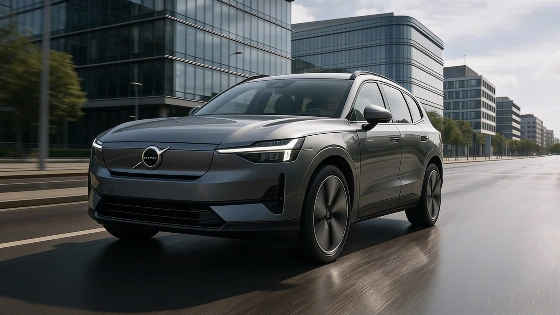
Volvo’s EC40 and ES90 in Spain are built for seamless OTA updates. The EC40, starting at about €50,200, gets regular improvements to its Google-based infotainment and battery management. The ES90, from around €72,800, was designed from scratch for full-vehicle OTA—not just infotainment tweaks.
The EC40 offers up to 579 km WLTP range and 408 CV in the Twin version. The ES90 delivers 650 km WLTP and 333 CV in its Single Motor Extended Range Core model. Both are fully electric, zero-emission, and score 8.5 and 9.5 out of 10 for OTA capability, based on how many systems can be updated and how often.
What Buyers Should Check
Before buying an electric SUV with OTA, ask: Does the brand update all control units or just the infotainment? Is there a public record of recent updates, or just promises? Is connectivity included for the first years, or will you need a subscription? Is the car’s electrical system centralized, or does it still rely on dozens of separate control units?
These questions matter. They decide if your car will keep up or fall behind.
Practical Details and Limitations
Not every OTA update is free. Security and essential updates usually are, but extras—like power boosts or advanced driving features—might cost extra or require a subscription. Most updates can be declined, but critical security patches are mandatory under UNECE R156. If an OTA goes wrong, it could hurt performance, but brands like Volvo have strong validation and rollback systems to prevent problems. Most premium European brands support OTA updates for 7–10 years after a model launches, though hardware limits what’s possible in the long run.
As electric SUVs become more like rolling computers, getting regular updates is now the norm, not a luxury. The difference between a car that gets better with age and one that falls behind is now measured in lines of code, not just horsepower or battery size. For buyers in Spain, the message is simple: the smartest investment is in a platform built to evolve. Volvo’s current lineup proves that with the right design and regulatory compliance, an electric SUV can stay relevant and valuable long after its first years on the road.