A new ranking singles out eleven Spanish universities for their leadership in social responsibility and environmental management. The data reveals sharp contrasts between public and private institutions and exposes persistent gender gaps at the highest academic levels.
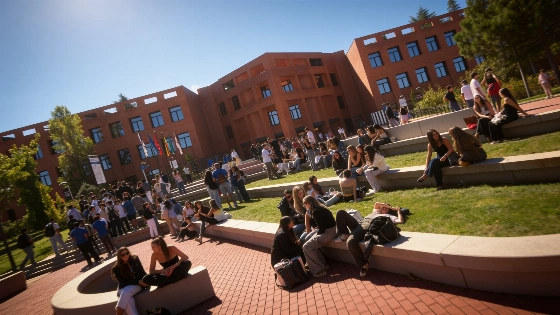
Girona, La Rioja, León, Valladolid, Burgos, and Rey Juan Carlos have landed at the top of Spain’s public university sustainability list. Five private campuses—Vic-Central de Catalunya, Católica de Valencia, Alfonso X, Comillas, and CUNEF—join them as leaders in the latest Ranking CYD Universidades Sostenibles. Fundación CYD’s 2026 edition puts these eleven in the spotlight. Their numbers tell the story.
The ranking uses 18 indicators. Half measure social commitment, half track environmental management. Social factors include gender equality, disability inclusion, health, and spending on social action. Environmental data covers renewable energy, waste, and water use. The split is clear.
По данным доступного поиска, официальные страницы Fundación CYD и Министерства университетов Испании не содержат подтверждения выпуска рейтинга CYD Universidades Sostenibles 2026 или его результатов.
Gender equality is still out of reach. Women now hold 44.58% of academic leadership jobs and make up 46.26% of teaching and research staff. But only 29.05% of full professors are women. Public universities show an even wider gap at 28.67%. Alejandra Suárez Gironza, the ranking’s coordinator, points out that women are nearing parity in leadership and research, but not in top professorships or rector roles. In a third of universities, women already make up more than half of research staff. That’s progress. But it’s not enough.
Students with disabilities remain a small minority. Only 1.53% of all students have a registered disability—1.36% in public, 0.89% in private universities. Budgets for special needs are tiny, just 0.03% of total spending. Social action gets 0.37% of spending in face-to-face universities. Public campuses spend a bit more than private ones.
Environmental numbers show a sharp divide. Public universities use less water (0.434 m3/m2), less energy (59.33 kWh/m2), and create less waste (0.586 kg/m2) per square meter than private ones. Private universities, though, spend more on sustainability—0.42% of their budgets—and get more of their energy from renewables (42.89% versus 35.84% in public). On one in four campuses, renewables now supply over 74% of energy. That’s a big shift.
Согласно результатам поиска, ни состав 11 университетов-лидеров, ни распределение 18 индикаторов между социальной и экологической составляющими, ни показатели по гендерному равенству и инвалидности не подтверждены официальными публикациями Fundación CYD, CRUE или Министерства университетов Испании.
Sustainability is now part of the curriculum and research. About 22% of degrees and 18.24% of research groups focus on the topic. Public universities lead, but private ones are close behind. Theses on sustainability make up 6% of the total. Public campuses again have the edge.
When only social commitment is measured, Universitat de València-Estudi General comes out on top. La Rioja, Autónoma de Madrid, and León follow. Alfonso X El Sabio and Málaga tie for fifth. Católica de Valencia, Girona, Burgos, Jaén, Jaume I de Castelló, and UNIE Universidad fill out the top ten. Eight are public, three are private.
For environmental management, Girona leads. Vic-Central de Catalunya, Alicante, Loyola, Valladolid, Vigo, Cádiz, Mondragon Unibertsitatea, Rey Juan Carlos, Córdoba, A Coruña, Santiago de Compostela, and Pontificia Comillas follow. Public universities dominate, but Vic-Central de Catalunya and Loyola—both private—stand out.
The study covers 84 Spanish universities. Seventy-nine offer in-person teaching, five are distance-learning. There are 48 public and 36 private. Three universities joined using only public data. The ranking’s results echo a bigger trend in Spain. Environmental and social standards now shape how universities are seen. This shift matches new rules in other sectors, like the recent crackdown on car emissions in Spanish cities reported earlier.
Spain’s universities are now a test case for the country’s push on sustainability and inclusion. The data is clear. Public universities are better at saving resources. Private ones invest more in renewables and sustainability. Gender gaps and low disability inclusion show that progress is slow. The new ranking does more than hand out awards. It shows the real gaps and the work left to do. For students, staff, and policymakers, these numbers are a wake-up call. The job isn’t finished.