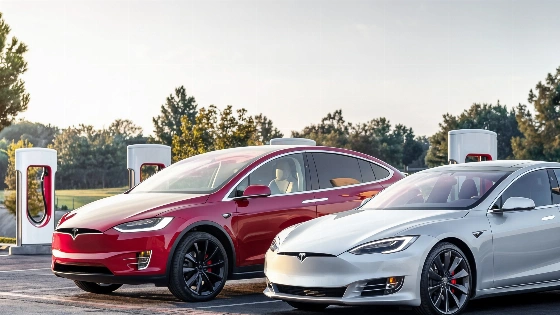
Elon Musk has announced plans to open source the code for Tesla Model S and Model X. However, past experience with the Roadster leaves many questioning whether the release will be as comprehensive as promised.
Elon Musk has once again pledged to make parts of Tesla’s technology public, this time targeting the Model S and Model X—two of the company’s longest-running vehicles. The announcement, made on X (formerly Twitter), quickly drew skepticism from industry observers and Tesla enthusiasts alike. The reason: Tesla has made similar promises before, but the reality has often fallen short of expectations.
According to Electrek, Musk stated that Tesla intends to “open source” the development of the Model S and Model X, referencing the company’s earlier move with the original Tesla Roadster. Yet, that precedent is precisely why many are wary. When Musk announced in late 2023 that the Roadster’s design and engineering would become open source, the actual release was limited to a small GitHub repository. It included a handful of files related to internal vehicle communications, a diagnostic tool, and a couple of PDF documents. Additional technical documentation was only accessible through Tesla’s service portal, and even then, only to registered users.
For developers and researchers, the information was useful but far from what is typically expected from a true open source project. Key elements such as CAD files, mechanical blueprints, full software source code, and comprehensive electronic schematics were missing. The repository itself has seen almost no updates since its initial publication, and most of the files had already been uploaded a year before the official announcement.
Another point of contention was the lack of a genuine open source license. Tesla’s documentation included a disclaimer rejecting any responsibility for the use of the files, but did not explicitly grant permission to copy, modify, or redistribute them. As a result, legal experts argued that the material could not be considered true ‘open source’ in the conventional sense.
History Repeats?
Tesla’s renewed promise to open up the Model S and Model X comes at a time when these models have lost commercial prominence to the more popular Model 3 and Model Y. Some see the move as an attempt to give these older vehicles a second life without committing significant resources to their ongoing development. However, the experience with the Roadster suggests that the new release may once again be limited to diagnostic tools, internal communication databases, and select technical documents—leaving out the most valuable information for independent developers or manufacturers.
One area that could prove significant is the potential release of the full Linux-based software used in these vehicles. Tesla was previously compelled to publish portions of its code to comply with GPL license requirements, but several organizations noted that the release was never truly complete. If Tesla follows through this time, it could finally address those longstanding gaps.
Despite the renewed announcement, there is still no official timeline or detailed breakdown of what Tesla actually plans to publish. The lack of specifics only adds to the skepticism, especially given the company’s track record. As noted by Electrek, the term “open source” has been used loosely by Tesla in the past, often referring to documentation that falls well short of industry standards.
Industry Context
The debate over what constitutes genuine open source in the automotive world is not unique to Tesla. Other manufacturers, such as BYD, have also made headlines for their approach to technology sharing and transparency. For example, the BYD Atto 2’s entry into the Spanish market has sparked discussion about how openness and innovation can drive competition and consumer trust.
For now, Tesla’s latest promise remains just that—a promise. Until the company provides concrete details and a clear timeline, many in the industry will continue to watch with cautious optimism, remembering that previous announcements have not always delivered the level of access or transparency that was initially suggested.
As electric vehicles become more central to the global automotive landscape, the question of open source technology will likely remain a contentious issue. For Tesla, fulfilling its pledge could set a new standard—or reinforce doubts about the company’s willingness to truly open its engineering to the world.