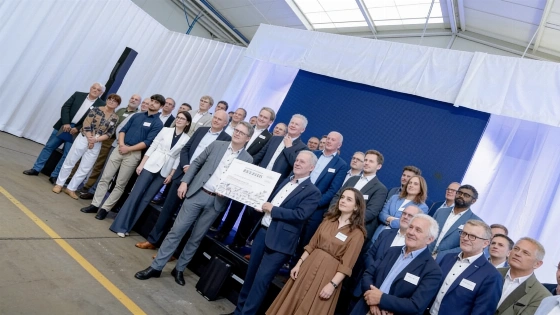
Thirty leading European trailer manufacturers have joined forces to challenge the EU’s latest CO2 emissions regulation. They warn that unrealistic targets could threaten jobs and the continent’s industrial base if not urgently revised.
Thirty of Europe’s largest trailer manufacturers, many of them fierce competitors, have set aside their rivalries to issue a rare joint warning to Brussels. Their message: the recently adopted Regulation (EU) 2024/1610 on CO2 emissions for new heavy-duty vehicles risks undermining the very foundation of European industry if left unchanged.
At the heart of their protest is a demand for a comprehensive review of the regulation’s deadlines and simulation methods. Industry leaders argue that the current framework is out of step with both market realities and the technical capabilities of today’s manufacturers. They caution that, unless the rules are adapted, European producers could lose ground to global competitors, putting thousands of jobs and critical factories at risk.
The regulation, which amends the earlier Regulation (EU) 2019/1242, requires trailer makers to achieve a 10% reduction in simulated CO2 emissions by 2030. However, the sector insists this target is unachievable under the technical parameters set by the EU. The core issue lies in the use of the VECTO simulation tool, which was designed for powered vehicles but is now being applied to trailers—components that do not generate direct emissions on the road.
To comply, engineers would need to make sweeping aerodynamic and structural changes to trailers. But these modifications would significantly reduce the payload capacity of trucks, forcing operators to put more vehicles on the road to move the same volume of goods. Manufacturers warn that this could paradoxically increase overall fuel consumption and congestion across Europe’s transport networks.
In their joint manifesto, the companies also criticize the EU’s system of credits and debits, arguing that it fails to account for the slow pace at which advanced aerodynamic technologies and low-resistance components can be rolled out at scale. They stress that the path to climate neutrality must be both environmentally and economically sustainable, and that political ambitions should not outpace what current technology can deliver.
The alliance is not calling for an end to Europe’s climate goals. Instead, they urge lawmakers to ground regulations in industrial realities and proven technologies. Specifically, they are asking for an accelerated review of the regulation, a temporary lowering of the reduction target to a more realistic level, and a phased withdrawal of trailer-specific obligations as zero-emission tractor units become more widespread in the market.
This unprecedented show of unity among traditional rivals highlights the scale of the challenge facing Europe’s manufacturing sector. It also echoes broader concerns about the pace and design of EU transport reforms. For example, the recent move to unify digital driving licences across member states, as covered in a previous report on cross-border enforcement, demonstrates how regulatory changes can have far-reaching effects on both industry and daily life.
Looking ahead, the outcome of this standoff will help define the balance between environmental ambition and industrial competitiveness in Europe. The debate underscores a central question: can the continent lead on climate without sacrificing its manufacturing strength? As the EU prepares for further negotiations, the trailer manufacturers’ united front signals that the answer will require more than technical compliance—it will demand a pragmatic, collaborative approach to regulation and innovation.