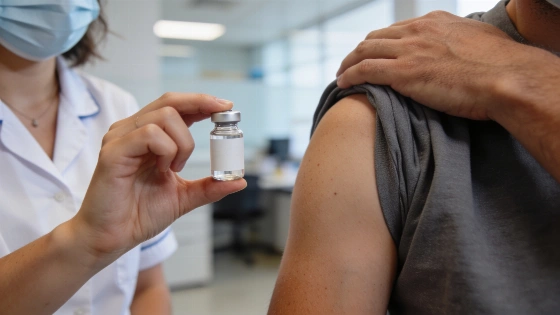
At the XIII Congreso de la Asociación Nacional de Vacunología in Vigo, experts warned that hoaxes and anti-vaccine messages could bring back diseases considered controlled or eliminated. Immunologist África González described Spain as one of the countries where the anti-vaccine movement has the least force.
González, a UVigo professor of immunology who chaired the congress’s scientific committee, identified false claims as a challenge for vaccinology. Europa Press reported her warning that measles vaccination coverage must exceed 95-97% to control the disease. Spain had been considered free of endemic measles circulation, but imported cases can still start new chains of transmission.
González proposed clear information that addresses people’s doubts.
The World Health Organization has also identified vaccine misinformation as an increasing threat as measles cases rise. Across 53 countries in the WHO European Region, around 90,000 cases were recorded in the first half of the year covered by its report: more than in all of 2018. Globally, cases from January to July were almost three times higher than during the same period in 2018. WHO urged social media platforms to share accurate, scientifically credible information about prevention and called on communities and public leaders to communicate those facts. A separate report on early diabetes screening covered Spanish hospitals beginning to screen close relatives before symptoms appear.
European Centre for Disease Prevention and Control figures in its assessment of diphtheria put Spain’s vaccination coverage at 93% in 2021 and 95% in 2022, rising to 96% in 2023. The assessment also included cases Spain reported to European authorities on 25 June 2025. A high national figure does not guarantee equal protection across every region or population group. Local gaps can leave communities vulnerable to outbreaks after an imported infection.