Spanish employees can now legally take up to four paid days off if extreme heat makes commuting unsafe or threatens their health. Companies must adapt working conditions or suspend activity when official alerts are issued.
When temperatures soar to dangerous levels, Spanish workers have a new legal right: up to four paid days off if extreme heat prevents them from safely reaching their workplace or creates a serious health risk. This measure, introduced after the Real Decreto-ley 8/2024, aims to protect employees during severe weather events, including heatwaves that have become increasingly common across the country.
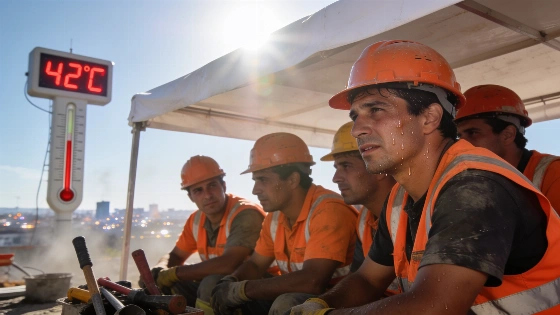
According to the Spanish Meteorological Agency (AEMET), another surge in temperatures is expected, with forecasts of 36 to 42 degrees Celsius in many inland regions and unusually warm nights. These conditions have prompted questions among workers about their rights when faced with hazardous heat. The law is clear: absence is permitted only when justified by official restrictions, the impossibility of commuting, or imminent and grave risk due to adverse weather.
When Paid Leave Applies
The Workers’ Statute now recognizes a paid leave of up to four days if employees cannot access their workplace or if travel routes are blocked, as well as in cases of severe and immediate danger—including those caused by extreme weather. This provision was established to ensure that no one is forced to risk their health or safety for work during emergencies.
However, not every hot day qualifies. The situation must be serious and verifiable, typically confirmed by official AEMET warnings at orange or red alert levels. These alerts serve as a benchmark for determining whether normal work activity can continue safely.
Employer Responsibilities During Heat Alerts
Employers are legally required to safeguard their staff from extreme heat. Under Real Decreto 486/1997, workplace conditions must not endanger health or safety, and companies must avoid exposing workers to excessive temperatures or humidity. For outdoor jobs or roles where closure is not possible, the law mandates specific measures against adverse weather, including heatwaves.
If an orange or red alert is issued and preventive steps cannot guarantee safety, employers must adapt working conditions—such as reducing hours, changing shifts, or modifying tasks. This is especially relevant for sectors like construction, agriculture, delivery, street cleaning, and infrastructure maintenance, where exposure to the sun and physical exertion are unavoidable. The Ministry of Labour has intensified oversight this summer, sending over 113,000 reminders to companies in high-risk sectors about their obligations during heatwaves.
What If Extreme Heat Persists?
If dangerous conditions last beyond the initial four paid days, the absence can be extended until the risk subsides. Employers may also suspend contracts or reduce working hours due to force majeure, as outlined in the Workers’ Statute. Where possible, remote work can be implemented, provided the necessary tools and communication channels are available.
Companies cannot require employees to work without adapting schedules, ensuring hydration, providing shaded areas, or reorganizing tasks when heat poses a real threat. The Law on Occupational Risk Prevention also grants workers the right to stop work and leave the premises if there is a serious and imminent risk to life or health.
As Spain faces more frequent extreme weather, practical safety measures are becoming as essential as protective eyewear for rare solar events—like those recently highlighted in the article on affordable certified eclipse glasses—underscoring the growing need for adaptation in daily life and work.