After years of legal dispute, the father of Francesc Augé has withdrawn his opposition to his son’s euthanasia. This decision removes the main barrier to the procedure, which had been stalled by court battles in Catalonia.
The long-running legal battle over the right of Francesc Augé to access euthanasia in Catalonia has reached a turning point. After more than two years of court delays and appeals, Augé’s 96-year-old father has decided to withdraw his opposition, effectively clearing the way for his son to proceed with the assisted dying process. The case, which had been stalled despite approval from the regional Commission of Guarantee and Evaluation, now moves forward after the father’s decision to step aside due to exhaustion from the prolonged dispute.
Francesc Augé, aged 56, had received authorization from the Catalan commission—an independent body of legal, medical, and bioethics experts—to undergo euthanasia, originally scheduled for September 2025. However, the process was halted by legal challenges initiated by his father, leading to a series of court rulings and interventions, including a notable decision from the Supreme Court. The Supreme Court ruled in May that individuals with a particularly close relationship to the applicant could intervene and even halt the euthanasia process, a decision that directly impacted Augé’s case and allowed his father to request a judicial review.
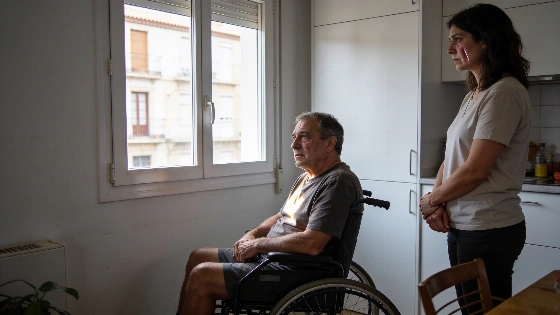
Despite this legal avenue, the father’s lawyer, Valentín Gómez, confirmed that his client will not pursue further action. Gómez expressed satisfaction that the Supreme Court had clarified the legitimacy of a parent’s right to intervene in such cases, but acknowledged that the father’s advanced age and fatigue led to the decision to withdraw. According to Gómez, the relationship between father and son has not been damaged by the legal conflict, although Augé, who has suffered two heart attacks and four strokes, has left his father’s home and now lives with other relatives due to his care needs.
The legal saga has highlighted the complexities of Spain’s euthanasia law, particularly regarding who has standing to challenge or halt the process. Initial court rulings supported Augé’s right to proceed, stating that family ties alone did not grant the father legal standing to block the request. However, the Catalan High Court later sided with the father, recognizing the legitimate interest of close relatives. This back-and-forth culminated in the Supreme Court’s plenary decision, which set out criteria for determining “emotional proximity,” such as shared residence, duration of cohabitation, demonstrated empathy, and involvement in the applicant’s decision-making process.
The Supreme Court also made clear that only individuals with a direct and close relationship—not organizations or unrelated parties—could intervene in euthanasia cases. This distinction was underscored by previous controversies, such as the case of Noelia Castillo, where a legal association intervened on behalf of her father, delaying her access to assisted dying for over 600 days. For further context on how legal and political disputes can impact sensitive issues in Spain, see this analysis of government divisions during the Ceuta migration crisis: cabinet tensions over migration policy.
Spain’s euthanasia law, enacted in 2021, made the country one of the few in Europe to legalize assisted dying under strict conditions. The law requires approval from medical and legal panels and allows for objections from close relatives, but the Augé case has exposed the challenges in balancing individual autonomy with family involvement. The outcome of this case may influence future interpretations of the law and the practical application of assisted dying in Spain, especially as the population ages and similar cases arise. The decision also reflects broader debates in Spanish society about end-of-life rights, legal safeguards, and the role of family in such deeply personal decisions.