Alberto Núñez Feijóo calls the Ceuta border incident a 'premeditated occupation' and blames the government for not acting. The PP leader demands urgent action and criticizes the regularization of undocumented migrants.
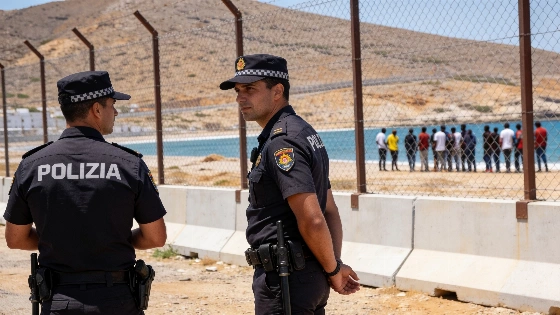
Alberto Núñez Feijóo has sharply criticized the Spanish government after traveling to Ceuta in response to the recent mass entry of migrants. The leader of the Partido Popular described the arrival of 50,000 people as a 'premeditated occupation' and argued that the executive was aware of the risk but failed to act. Feijóo placed direct responsibility on the government, claiming its policies have left Spain vulnerable to large-scale irregular migration.
Standing alongside Ceuta's regional president Juan Jesús Vivas, Feijóo insisted that the situation was not an isolated incident but a consequence of political decisions in Madrid. He argued that the government’s approach to regularizing undocumented migrants has sent a message that crossing into Spain by any route could lead to legal status. Feijóo also revealed he had spoken with several European leaders to share his concerns, noting that other EU countries have expressed unease about the developments in Ceuta.
The Partido Popular has called for urgent reforms to Spain’s immigration laws, specifically demanding changes to allow immediate rejection at the border for maritime arrivals. Feijóo also requested that Prime Minister Pedro Sánchez appear before Congress to explain the government’s handling of the crisis. According to Feijóo, official documents had identified the risk in advance, and he questioned why authorities did not act sooner if they were aware of the threat days before the mass entry.
During his visit, Feijóo promised that if his party comes to power, it will reinforce the borders of Ceuta and Melilla, though he did not provide details on how this would be achieved. He also addressed relations with Morocco, stating that while he supports cooperation and mutual respect, the Spanish government must respond firmly to actions that threaten border security. Vivas, who has led Ceuta’s regional government for seven terms, welcomed recent returns of migrants but stressed that normality has not yet returned to the city.
Prime Minister Pedro Sánchez, who visited Ceuta a day earlier, maintained that the government was caught off guard by the sudden influx. However, Feijóo rejected this explanation, expressing disbelief that all intelligence services could have failed to anticipate the event. He argued that the crisis was not simply the result of a Supreme Court ruling but also of the government’s decision to regularize large numbers of undocumented migrants, which he believes has encouraged further arrivals.
The situation in Ceuta has drawn national and international attention, with emergency services and local authorities under significant pressure. As reported in recent days, the city has faced a surge in arrivals, with humanitarian organizations such as the Red Cross providing urgent assistance to those reaching the Spanish coast. For further context on the ongoing challenges faced by Ceuta’s emergency teams, see the detailed coverage of recent arrivals and Red Cross operations in this related report.
Ceuta, a Spanish autonomous city on the North African coast, has long been a focal point for migration from Morocco and other countries. The city’s political landscape is dominated by the Partido Popular, which secured nine seats in the last local elections, followed by the PSOE and Vox. The recent crisis has intensified debate over Spain’s border policies and the government’s capacity to manage sudden migratory pressures. The outcome of this political confrontation may influence future immigration measures and Spain’s relations with neighboring Morocco and the European Union.