At a Madrid leadership meeting, Alberto Núñez Feijóo blamed the Government for Spain's housing crisis and called for a change of power. The PP is offering tax cuts, state-backed mortgage guarantees and more than one million homes while preparing for possible elections.
At the PP's national leadership meeting in Madrid, Alberto Núñez Feijóo accused the Government of failing after eight years in power. He put housing at the center of the party's attack. The plan is broad.
It calls for tax cuts, affordable rents and more than one million homes over four years. The PP says public land would be released, planning rules would move faster and builders would receive incentives.
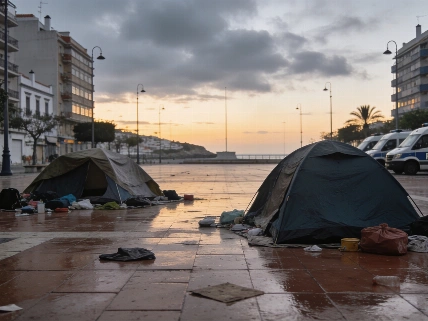
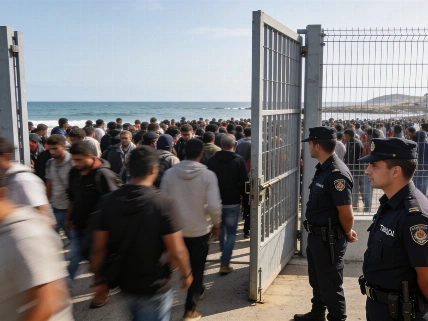
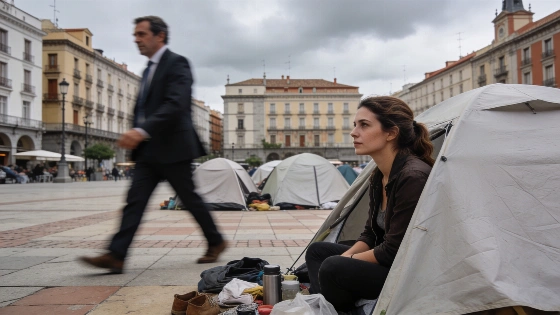
A new camp was expected at Madrid's Puerta del Sol. The migration crisis in Ceuta also remained unresolved. Feijóo said housing could not be fixed with two or three isolated measures or in five minutes. He said Spain needed a new government and a different economic policy.
The PP has linked its housing plan to the construction of more than one million new homes in four years, alongside faster permits and the mobilisation of public land.
The PP leader also blamed the Government for weakening the middle class. He said its members focused more on political controversies than on the housing needs of ordinary residents. He added that those now trying to mobilise the streets were responsible for the situation they were protesting against.
The party calls the housing market under the PSOE a major regulatory failure. It says the Government has not solved the problem during its eight years in office.
Feijóo's package would release public land and support affordable rentals. It would also give property owners tax deductions and guarantees against the occupation of their homes. These measures are proposals, not enacted policy.
The PP's economic document also refers to weakening or removing designated "tense areas". It includes an anti-squatting law, legal protection for landlords and tenants, and "positive administrative silence" to speed up procedures. State-backed mortgage guarantees would cover between 95% and 100%. Some tax reductions would reach 60%, especially under measures aimed at young buyers.
The Madrid camp has made the dispute more visible. Mayor José Luis Martínez Almeida accused the Government delegate in Madrid of failing to act. He also said the protest was being handled for electoral reasons. Almeida said the city would consider legal action if the delegate did not intervene.
A housing plan cited by Democrata, drawing on official housing data, puts the average price of free-market housing at €2,230 per square metre at the end of 2025. That represented a 13.1% annual increase and the highest level in the Housing Ministry's series dating back to 1995.
Democrata also cited official housing data showing that more than 1 million apartments in Spain are held by companies. Every fifth rental property belongs to that category. The figure adds to the debate over the shortage of homes.
At the same time, Madrid's city government planned a meeting between Urbagestión and the legal representatives of Maricarmen. The municipality says the woman who was evicted is already receiving the maximum available support through telecare home assistance and occupational therapy.
Officials said an agreement was possible. They wanted the meeting formally recorded to prevent conflicting accounts.
Almeida said the goal was for Maricarmen to return home as soon as possible. Her case has become one of the human stories driving the housing dispute in the capital, alongside the demands made by protesters in Sol.
RTVE and other media reported that Feijóo described the eviction as "disheartening" on 25 September. He said the Government was not in a position to talk about housing and again called for more than one million homes to be built. The episode follows earlier housing coverage of the Madrid camp's call for indefinite rental contracts.
Isabel Díaz Ayuso also criticised the mobilisation and the Government's housing proposals. The president of the Community of Madrid said the camp was hurting businesses across the square and nearby streets. She also pointed to tourism and local residents. Ayuso opposed changing the rules for landlords who have made their properties temporarily available to tenants.
Housing was not the only issue at the meeting. Feijóo shared the chairmanship with Ceuta president Juan Jesús Vivas and Melilla president Juan José Imbroda. He announced that the party would create a Senate commission of inquiry into the irregular arrival of migrants in Ceuta.
The PP says the commission will establish how the events occurred. It also wants measures to prevent a repetition.
The announcement followed the resignation of Ceuta's Government delegate. At PP headquarters, the departure was described as the executive's second resignation since the crisis began two months earlier. Senate spokesperson Alicia García said the change would not stop scrutiny of what reached Moncloa or of the response to the warnings.
The PP is framing the dispute as part of a wider electoral contest. Party sources expect general elections, along with votes in several autonomous communities and municipalities. The leadership meeting also set dates for more than twenty party congresses.
Feijóo told party members not to assume victory. He promised to pursue the change he says Spain needs.
Housing and Ceuta now give the PP two ways to connect everyday pressure with its demand for a new government. The housing proposals set a direction, but they do not offer an immediate solution. Their value will depend on how they become policy.
For now, the party has chosen confrontation over compromise. It is presenting the package as support for young people and the middle class through first-home tax relief and state guarantees. It is also attacking the Government's approach to evictions and tenant protection.