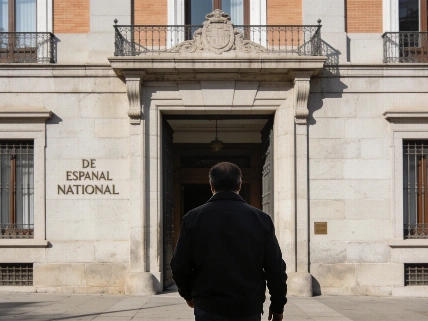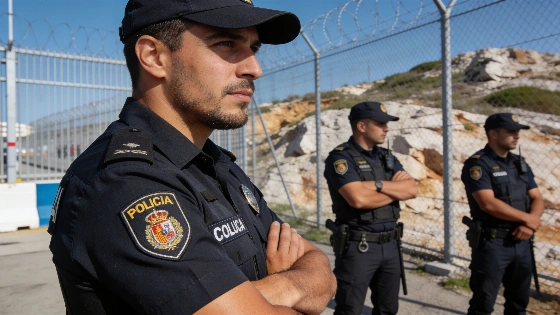
King Felipe VI issued a rare and forceful statement after thousands of people entered Ceuta and, to a lesser extent, Melilla from Morocco. He described the situation as deeply troubling and called on the Spanish state to ensure the security of residents in both autonomous cities. The emergency unfolded on 30 and 31 July 2026. Reporting by ABC and Reuters put the overall influx at about 80,000 people, with more than 50,000 reported to have arrived by sea. The arrivals, predominantly young people aged 15 to 35, placed exceptional pressure on local authorities and accommodation capacity. Nearly a hundred people also died in the waters off Ceuta.
The Royal Household made Felipe VI’s message public, highlighting his indignation over the events and his insistence that the state deploy all necessary resources to prevent a recurrence. The king described the crossing as a “mass intrusion by tens of thousands of people violating a Spanish border that is also a European border” and concluded: “It is unacceptable.” His words matched the gravity of the crisis, which Prime Minister Pedro Sánchez had previously described as an attack on Spain’s territorial integrity. The monarch’s tone recalled his response to other national challenges, including his televised address after the 2017 Catalonia independence referendum.
After the border breach, the Spanish government deployed the army to Ceuta to restore order. The situation subsequently stabilized, and government measures led to more than 12,700 people returning to Morocco between 10 August and 20 October 2026. Authorities said most adult migrants who remained in Ceuta were housed in facilities provided by the General State Administration. Those figures describe returns and accommodation after the crisis, not the total number of people who entered. Ceuta has a resident population of about 84,000, underscoring the pressure on its institutions.
The effort to clear the backlog also raised questions about migrants’ treatment and access to legal safeguards. Reuters reported concerns over whether people being returned had been adequately informed and could access procedural protections. The operational challenge grew into a broader debate over how to conduct returns quickly while respecting individual rights and Spanish law.
Throughout the emergency, Felipe VI maintained direct contact with the presidents of Ceuta and Melilla, Juan Jesús Vivas and Juan José Imbroda, as well as with Prime Minister Pedro Sánchez and opposition leader Alberto Núñez Feijóo. Zarzuela said the king offered each words of encouragement and resolve, stressing the need for unity and decisive action. His message also called for clear support and solidarity with the populations of Ceuta and Melilla. Sánchez later emphasized that Spain needs Morocco’s cooperation to manage migration, linking border control to the wider bilateral relationship.
The king followed developments from Palma, where the Royal Household is based during August. On 13 October 2026, he visited Ceuta for the first time since his accession, then travelled to Melilla the following day. The visits extended the monarchy’s response beyond its initial statements, combining support for residents with a firm restatement of Spain’s position on sovereignty. Felipe VI said Ceuta and Melilla are “an inalienable part of Spain’s political and national reality” and declared: “Our country’s sovereignty and territorial integrity are not negotiable; they are indisputable.” He also said that people who entered irregularly should, as a general principle, return to their place of origin through legally established procedures, with dignity and the guarantees of Spanish law.
The crisis tested Spain’s border management and sharpened debate over the European Union’s external frontier. Ceuta and Melilla are Spain’s only land borders with Africa, and their protection has an EU dimension. The king framed the issue as migration management and a matter of territorial integrity and shared European responsibility. The government’s handling of the situation and the speed of returns drew scrutiny from domestic and European partners, who called for stronger preventive measures and coordinated responses, as detailed in this previous analysis of the Ceuta border crisis.
Ceuta and Melilla have long been focal points for migration and diplomatic challenges with Morocco. The July crossings put border enforcement and migration coordination in sharp focus, with bilateral relations also under scrutiny. The subsequent returns highlighted the need to balance operational control with individual legal protections. Felipe VI’s intervention signalled how seriously the Spanish state views border protection and the well-being of residents in the two cities.