Fernando Alonso climbed from 18th to eighth in Malaysia. Pedro de la Rosa credited the driver and Aston Martin's improved chassis after a costly tyre gamble, while the team's four points became its best result of 2026.
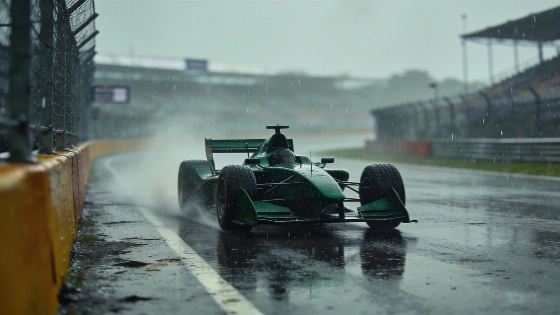
A dry-tyre call sent Fernando Alonso down to 18th at the Malaysian Grand Prix. He had started 12th, but Aston Martin fitted slicks while the track was still heavily wet. Alonso recovered and finished eighth after holding his place through the closing laps. The FIA and Formula 1 race summaries confirmed the result gave Aston Martin four points. It was the team's best finish of 2026.
The recovery was not built only on rivals' mistakes. Alonso used two sets of hard tyres for long stints and worked his way back into the points. George Russell retired. Lando Norris made an error. Those incidents helped Aston Martin, but Formula 1's race account also pointed to the team's late pace. Alonso stayed ahead of Norris at the finish.
The gamble nearly ruined the race.
Aston Martin put both cars into Q2 for the first time in the 2026 season: Alonso qualified 12th and Lance Stroll 14th.
Pedro de la Rosa called the drive exceptionally forceful and stressed the scale of Alonso's recovery. The Spaniard lost considerable time at the start, then passed Lewis Hamilton while running the same tyre type. De la Rosa, Aston Martin's ambassador, said Alonso kept finding speed after the strategy had sent him to the back.
The race showed the risk of guessing where the track is headed. Aston Martin started both cars on slicks while the surface was still wet. Alonso and Stroll lost places at first. Later, the hard compound gave Alonso the base he needed to recover. Formula 1's official race-day review said tyre management and Alonso's pace during the dry phase were central to his return to the points.
Stroll also began the Malaysian weekend with a realistic chance of scoring. Aston Martin produced its strongest qualifying result of the year. Alonso was 12th and Stroll 14th, with Carlos Sainz the only driver between them in that part of the order. The team saw enough pace to think the Canadian could move closer to the Q3 fight. Alonso later said Aston Martin had been more competitive across the weekend and called the four-point haul a good result.
That changed the standings.
The P8 finish also had a championship significance: Aston Martin reduced its deficit to Williams in the midfield standings, turning a difficult weekend into a useful gain for the team.
The starting positions mattered because the AMR26 had already shown stronger cornering performance at the Dutch and Hungarian events. Alonso scored points at both races. Those results showed that the chassis could fight around the top ten. Inside the team, the power unit was seen as the weaker part, not the platform's ability to carry speed through corners.
Aston Martin had also expected Spa to suit the AMR26 after Adrian Newey's upgrade package improved its cornering potential. Malaysia was a harsher test. The team still had to show that its race pace could hold up against Haas, Alpine and Racing Bulls. The early tyre call made the job harder and left Alonso alongside drivers such as Hamilton, Norris and Charles Leclerc at the rear.
After qualifying, Alonso said the car had not fundamentally changed since the summer. Its pace still depended heavily on the circuit layout and the length of the straights. That helps explain how a difficult season could produce a strong result on a track where cornering and changing grip mattered more than a single-lap ranking.
De la Rosa looked beyond the final position. He said the wet conditions gave drivers repeated chances to lose control. The Aston Martin pair avoided those traps while using the speed available from the chassis. In his view, the final result would not have changed dramatically without the poor opening strategy because the underlying pace was already there.
Alonso's eighth place has a clear meaning. It does not erase the AMR26's power-unit limitation or the strategy call that sent him backwards. It does show that the chassis can support a points challenge when the car survives the hardest parts of a race. Alonso rebuilt the result after Aston Martin's opening mistake. Adrian Newey's strengthened platform helped.