Fernando Onega’s youngest son speaks publicly for the first time after his father’s death. Fernando Jr. made an unexpected appearance on stage to accept an award on behalf of his father. His brief speech and the family's reaction became a topic of discussion in Spanish media.
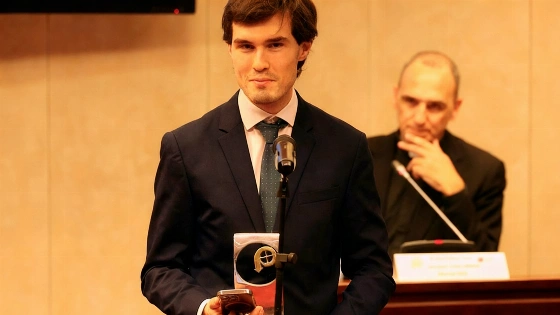
At the center of Spain's social news is the rare public appearance of Fernando Ónega Jr., the youngest son of the legendary journalist. After the death of Fernando Ónega in March, his family found itself surrounded by sympathy and support, but only now, several months later, has the younger heir decided for the first time to take the stage and say a few words about his father. The occasion was the ¡Bravo! 2025 award ceremony, where Fernando Jr. accepted a posthumous award for his father and unexpectedly became the focus of public and media attention.
A touching moment at the ceremony
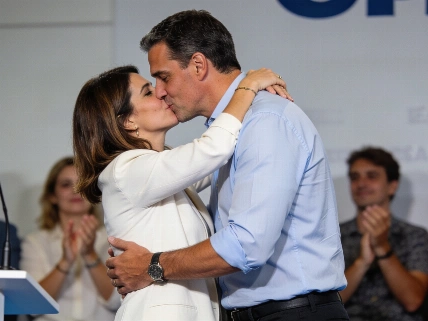
As Divinity notes, the award ceremony was held in Madrid under the auspices of the Commission for Social Communications (CECS). The late Fernando Ónega's widow, Ángela Rodrigo, was joined on stage by their 23-year-old son, who until then had preferred to stay out of the spotlight and, unlike his elder sisters Cristina and Sonsoles, not to pursue a career in journalism. His short but heartfelt speech became one of the most talked about moments of the ceremony. Fernando Jr. emphasized that he is proud of his father, who devoted his life to defending human dignity and rights, and thanked the organizers for recognizing the family's contributions.
Family support and personal revelations
After the official part, journalists noted that the atmosphere around the Onega family was filled with emotion, but without ostentatious drama. Fernando Jr. admitted that for him this day was both joyful and a bit sad, as his father had dreamed of this recognition. He reservedly joked about his first public speech, commenting that he was 'doing his best', and once again emphasized what an example his father had been—not only at home, but for many in the profession. The journalist's widow, Ángela Rodrigo, also shared warm words, calling her husband the best person she had had the privilege to spend her life with, and admitted that he rarely gave advice, but always knew how to impart important life lessons. According to her, the older daughters could not attend the ceremony due to work commitments.
A rare appearance and public reaction
Fernando Jr.'s appearance in public came as a surprise to many, since he has always stayed away from media attention. His composure and sincerity on stage sparked a wave of support and approval in the room. Spanish media note that moments like these—when the heirs of well-known families step out of the shadows in memory of loved ones—become the subject of special interest and discussion. In this sense, the Onega family story echoes other personal admissions that have been heard more frequently lately: for example, recently Natalia Sánchez spoke candidly about a difficult period in her relationship with Víctor Elías, which also drew widespread attention (details of this story).
Context and significance
The story of the Onega family once again reminded the Spanish public how personal moments and family gestures become part of collective memory. The ¡Bravo! 2025 Award, presented posthumously to Fernando Onega, was not only an acknowledgment of his professional contribution, but also an occasion for a rare public family gathering. Attention to the youngest son, who usually avoids the cameras, only heightened interest in the ceremony and gave it a special sense of sincerity. As recent years have shown, it is precisely these moments—when the personal becomes public—that resonate most with the Spanish audience.