Barcelona Records Historic Lowest Birth Rate in 85 Years. The number of newborns in Barcelona has reached its lowest level since 1939. The population is aging, while migration flows remain high. The city is changing before our eyes.
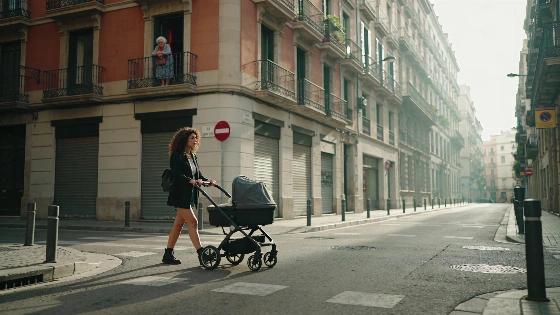
Barcelona has recorded the lowest birth rate since the end of the Civil War: according to the municipal registry as of January 1, only 11,012 children were born in the Catalan capital in 2025. This is 1.3% less than the previous year and only slightly higher than the 1939 figure, when the city was suffering the aftermath of the war and had about one million residents. The decline in birth rates has continued for several decades, despite a short-lived rise in the early 21st century.
In 2025, the mortality rate amounted to 14,557 cases, 1% lower than the previous year. Against this backdrop, the structure of households is changing: families with children are becoming increasingly rare, accounting for just 21.4%, while nearly a third of all households now consist of single residents. The average age of city dwellers has risen to 44.6 years, and the number of centenarians is approaching 1,200, with women making up 82% of this group.
Barcelona’s total population remains stable at 1,729,963 people — the second highest figure in the past 41 years, though 0.1% less than last year. However, behind this stability lies significant migration movement: 150,000 people moved to the city over the year, while 135,000 left. As noted by the municipal statistics service Barcelona Dades, such flows are explained not only by real relocation, but also by the regularization of records for those who no longer actually live in the city. Barcelona remains an important entry point for migrants, but many do not stay here for long.
An important trend has been the rise in educational attainment: 37.4% of residents over 16 have higher or equivalent education, with the figure even higher among women. Among foreigners, the proportion of people with higher education reaches 42.7%, and among new residents — 44%. This highlights the growing importance of qualified human capital for the city.
The proportion of native residents continues to decrease and now stands at 44.6% of the total city population. The number of residents born outside Spain is approaching 630,000. Among the new residents, the largest groups are from Argentina, Colombia, and Pakistan.
Demographic changes in Barcelona are taking place against the backdrop of other significant events in Spain. For example, a large-scale police operation recently took place in Torrelavega, resulting in dozens of arrests — you can read more about this in the article about the largest raid in Cantabria.
To understand the situation, it is important to consider that declining birth rates and an aging population are common trends for major Spanish cities. According to the National Institute of Statistics, similar developments are being observed in Madrid and Valencia. At the same time, migration partially offsets the natural population decline but does not reverse the trend toward aging. Experts attribute this to changes in family structure, rising cost of living, and the priority given to education. In the coming years, these factors may affect the labor market, healthcare system, and the city's social policy.