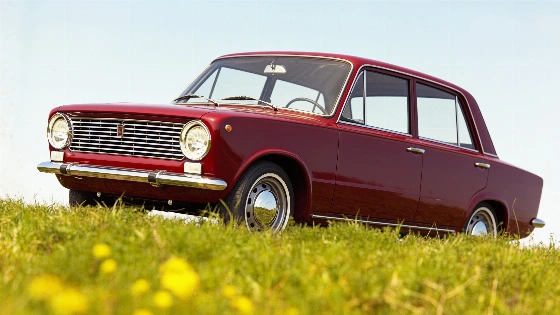
Turin’s Heritage Hub marks the 60th anniversary of the Fiat 124 with a rare exhibition. Five historic models and original brochures reveal how this Italian sedan became a worldwide phenomenon and shaped mobility for decades.
Five Fiat 124s now sit on display at Turin’s Heritage Hub. Each car tells a piece of the story. The exhibition runs until late November. It’s more than a birthday party for a famous sedan. The show puts a spotlight on how one car changed daily travel for millions.
The Fiat 124 first appeared in 1966. Dante Giacosa led the technical team. The car was built for easy use and simple repairs. It had a classic three-box shape, a roomy cabin, and features that stood out at the time. Four-wheel disc brakes and a 1,197 cc engine designed by Aurelio Lampredi gave it an edge. The car weighed only 855 kg and made 60 horsepower. It won "Coche del Año 1967" and soon filled roads across Europe. Stellantis records show the Fiat 124 and its licensed versions were built for about 40 years. More than 20 million units rolled out worldwide. Over 1.5 million were made in Italy alone.
The Fiat 124 made its public debut at the Geneva Motor Show in March 1966 and was named European Car of the Year in 1967.
The 124’s story goes far beyond Italy. The exhibition lineup includes the original sedan. There’s a 124 Special that crossed Africa and Europe in the 'Raid de los Dos Cabos'—a 40,000-kilometer trek from Cape Town to North Cape in just 51 days. Visitors also see the Sport Spider by Pininfarina, the Sport Coupé from Centro Stile Fiat, and the Abarth 124 Rally. That last one put Fiat on the rally map.
Adaptability set the Fiat 124 apart. Factories built it in Italy, Spain (SEAT), the Soviet Union (LADA-VAZ), Turkey (Tofaş), and India (Premier). Over four decades, more than 20 million cars left assembly lines around the world. The 124 became a symbol of practical transport and a model for global car production. This kind of reach is rare. Stellantis points out the Fiat 124 was one of the first "global cars." Its platform was tweaked for different countries and built under license in many places.
Original brochures from the 1960s line the display cases. They show the hope and pride of that era. Visitors at Via Plava 80 can see how the Fiat 124’s design and engineering shaped later cars in Europe and beyond.
The Spanish SEAT 124 was produced from 1968 to 1980, initially in Barcelona and later also in Pamplona, with a total of 896,136 units built—excluding derivatives like the 1430 and 124 Sport Coupé. In the Soviet Union, the Fiat 124’s design became the foundation for the Lada/VAZ family, which saw over 17.3 million vehicles produced across 44 years.
Fiat’s approach with the 124 was simple. The company mixed tough mechanics, low cost, and flexibility. That formula still matters. The 124’s journey—from Spanish cities to Russian highways—shows how a good idea can last. The Heritage Hub’s show is not just about looking back. It proves the lessons of the Fiat 124 still shape how carmakers think about everyday vehicles. For anyone curious about where modern mobility began, Turin’s tribute offers a clear answer. One car really did change the world.