Michelle Leake, a British caregiver, has died from injuries suffered in the Los Gallardos wildfire. Her death brings the toll to 15, making it the deadliest fire in Andalusia’s history. Families are demanding answers about evacuation procedures.
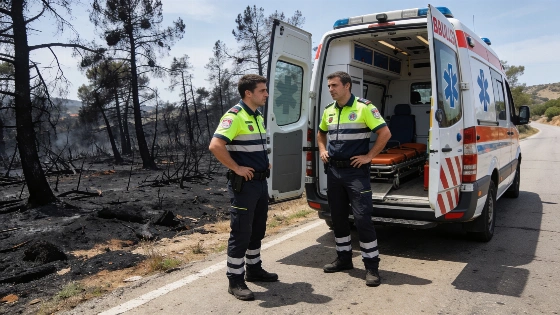
The death toll from the Los Gallardos wildfire in Almería has reached 15 after Michelle Leake, a British caregiver hospitalized since July, died from her injuries. Her death makes this the deadliest fire ever recorded in Andalusia and has increased scrutiny of the region’s emergency response and evacuation procedures.
Leake had lived in Spain for twenty years. She was admitted to Virgen del Rocío hospital in Seville on July 10 with severe burns over 40% of her body. She was injured while trying to rescue the elderly woman she cared for in Bédar. Both were caught by a sudden fireball as they tried to escape by car, but the road was already blocked by flames. Another driver intervened, and emergency services evacuated them. The 93-year-old woman, also British, died soon after arriving at Hospital Torrecárdenas in Almería.
The wildfire destroyed approximately 5,200 hectares of land in the Los Gallardos area, according to official estimates cited by regional media.
With Leake’s death, the international scope of the tragedy is even clearer: of the 15 victims, 14 were foreign nationals—nine women and five men—from the United Kingdom, Belgium, France, and the United States. Only one victim was Spanish. The fire broke out on July 9 and spread rapidly, at 128 meters per minute, killing 12 people on the first day. Five more, including Leake, were evacuated with critical injuries. Another patient died on July 28.
Families of the victims have set up support platforms such as helpbedar.com to raise funds for legal costs as they seek answers about the official response. Their main concern is not only the cause of the fire, but also how authorities communicated evacuation orders. The Junta de Andalucía says a mass Es-Alert was not possible because the local population is scattered, and that tailored instructions were given. Survivors and relatives say they received no clear guidance, fueling frustration and calls for accountability.
Leake’s sister, Sharon, started a crowdfunding campaign to cover medical and living expenses, as Michelle was unlikely to work again. Despite initial hopes, Leake remained sedated and on a ventilator until her death. The campaign is one of several efforts by families to manage the aftermath, both financially and emotionally.
Following the tragedy, pressure has mounted on Andalusian authorities to launch a formal investigation into the actions of emergency services and local officials. Families of the victims have submitted requests for a parliamentary commission to examine the adequacy of evacuation protocols and communication during the fire.
Spain has faced a series of devastating fires in recent years, and the Los Gallardos blaze now stands as a stark example of the risks from fast-moving wildfires and the difficulty of protecting vulnerable people in rural areas. The incident has drawn comparisons to other emergencies in different regions, highlighting ongoing gaps in emergency preparedness and communication.
The investigation is focused on whether authorities acted quickly and effectively to warn residents and coordinate evacuations. The lack of a unified alert system for scattered communities has emerged as a serious weakness. The Los Gallardos fire has exposed not only the destructive force of wildfires in southern Spain, but also the need for clear protocols and reliable communication. Without changes, the region remains at risk when disaster strikes again.