Castilla y León’s firefighters report critical shortages, lack of training, and unsafe conditions after Spain’s worst wildfire season. Unions and workers warn of inhumane workloads and urgent risks.
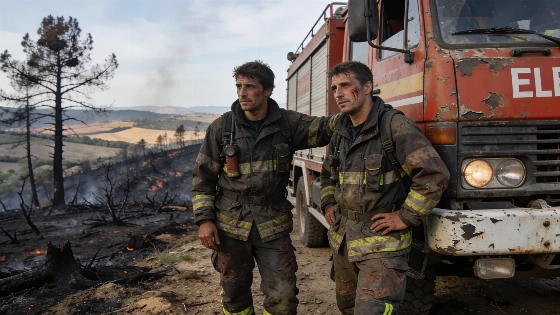
Firefighters across Castilla y León are raising urgent alarms over deteriorating working conditions following the most devastating wildfire season in Spain’s history. After a series of record-breaking blazes, including the catastrophic fire in Ávila, crews report being pushed to the brink by insufficient staffing, outdated equipment, and a lack of proper training. The situation has led to public protests and calls for immediate intervention from authorities.
Reports from multiple provinces highlight a system under severe strain. Many firefighters are recruited with only basic education and minimal requirements, often without adequate training or even language proficiency. The region’s emergency response is further hampered by unreliable communication devices, forcing teams to rely on personal mobile phones in areas with poor coverage. Vehicles are frequently in disrepair, and many fire stations operate with incomplete crews, leaving critical posts unfilled during emergencies.
In Ávila, the consequences of these shortcomings became clear during the Burgohondo inferno, now considered the largest wildfire in Spanish history. Firefighters were sent into dangerous situations under questionable orders, resulting in injuries and equipment loss. In other incidents, such as in Casavieja, teams struggled with coordination, while in El Barco de Ávila, available personnel were left idle as fires spread elsewhere. The lack of a unified response has fueled frustration among frontline workers.
León and Zamora have also suffered heavily, with nearly 140,000 hectares burned in 2025 alone. Firefighters describe a daily reality of malfunctioning radios, poor vehicle maintenance, and a chronic shortage of drivers and support staff. Some bases are overcrowded, lacking basic amenities like air conditioning or proper protective gear. Supplies such as isotonic drinks and first aid kits are often expired, and workers are forced to purchase essential equipment out of pocket. Many also take on maintenance and repair tasks themselves due to the absence of official support.
Vigilance posts remain understaffed or are equipped with outdated infrastructure, and the regional government’s investment in surveillance cameras has drawn criticism for failing to detect fires effectively. In some cases, untrained individuals from unemployment rolls have been assigned to critical roles without even basic instruction, increasing the risk for both themselves and their teams. Companies managing firefighting contracts reportedly pressure injured staff to return to work prematurely, citing penalties imposed by the Junta for missing personnel.
Efforts by President Alfonso Fernández Mañueco to shift private sector employees to the Tragsa model have not resolved the underlying issues. Firefighters say that poor working conditions and low pay make it difficult to attract and retain qualified staff, leading to the acceptance of nearly any applicant. Complaints also target technical supervisors, many of whom are described as lacking operational knowledge and being appointed without transparent criteria. The recent creation of the Directorate General for Prevention and Extinction of Forest Fires has yet to deliver noticeable improvements, with key leadership positions still in transition.
Veteran members of the Brigadas de Refuerzo contra Incendios Forestales, part of the Ministry for Ecological Transition, note that Castilla y León and other regions increasingly rely on national reinforcements and the Military Emergency Unit, rather than strengthening their own resources. Some firefighters express concern that new recruits are more interested in social media exposure than in professional service, reflecting a broader sense of pessimism about the future of the system.
Against this backdrop, unions and social groups have organized demonstrations in several provinces, demanding urgent reforms. The crisis in Castilla y León echoes broader challenges faced by emergency services across Spain, as highlighted by recent government initiatives to support those affected by wildfires, such as the Madrid regional aid program for businesses impacted by fires. The ongoing situation underscores the need for comprehensive investment in training, equipment, and personnel to ensure the safety of both firefighters and the communities they protect.
Spain’s wildfire seasons have grown increasingly severe in recent years, with 2025 marking an unprecedented loss of forested land. Castilla y León, with its vast rural areas and challenging terrain, remains particularly vulnerable. The region’s experience serves as a warning for other parts of the country, highlighting the urgent need for systemic change in emergency response and prevention strategies.