Magna Art Auctions’ website was overloaded almost as soon as bidding began, with interest coming from Spain and abroad. The first 46 lots sold in less than two hours brought in €58,750 for the Franco family. The auction opened in Madrid on 27 October 2026, with bidders taking part in person or remotely, by telephone, in writing and online through international platforms. Europa Press reported that the first session began “con total normalidad.”
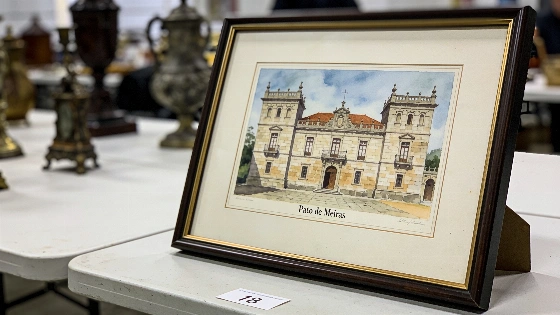
The sharpest jump came for a painting of the Pazo de Meirás facade. Estimated at €50, it sold for €6,000 after a prolonged contest. A three-step ladder from Franco’s library rose from €50 to €1,500. The catalogue’s opening prices ranged from €20 to €5,000, and its combined starting value was reported at about €207,700. The objects included furniture and porcelain, as well as carpets and portraits of Francisco Franco. There was also a photograph of Juan Carlos I dedicated to the dictator.
The auction covers around 1,000 movable objects grouped into 689 lots. The Martínez-Bordiú and Franco family consigned the lots after the Pazo de Meirás, in Sada, A Coruña, was returned to public ownership by court order in 2020. The property and its contents were treated separately: the state retained objects it considered part of national heritage, while the family maintained that other movable goods were private property. The CRMH and the Asociación para la Recuperación de la Memoria Histórica (ARMH) say the national administration failed to defend the goods, while the Xunta de Galicia remained passive. Carlos Babío, president of the CRMH in A Coruña and a descendant of a woman whose property was taken to expand the estate, called the sale a scandal and criticised the approval given by the central and regional administrations.
The dispute centres on which objects belong to the state. Between 2022 and 2024, courts recognised state ownership of nearly 700 movable or documentary items after expert assessments found they were national property or had significant historical value and formed part of the mansion’s decoration before 1975. Those items remained at the Pazo de Meirás. The State Attorney’s Office concluded that ownership of the other goods could not be defended.
The ARMH had asked the Government to seek an interim suspension of the auction through the Fiscalía General del Estado. The association argued that the dictator’s grandchildren should establish that the items belonged to them, rather than being gifts to the head of state and therefore part of Patrimonio Nacional. The auction went ahead. Magna Art Auctions catalogued the objects and packed them into six trucks between late June and early July, under administrative supervision.
ARMH president Emilio Silva has argued that the family used the Pazo de Meirás for decades without sanction, and that the state should scrutinise efforts to sell objects that may have belonged to it. In a separate matter involving public enforcement, Spain’s Consumer Ministry opened proceedings over holiday-rental listings in Israeli settlements, as reported in a separate consumer case.