Rolls-Royce tests hydrogen engine: aviation braces for change. Rolls-Royce and easyJet have tested a commercial aircraft engine running exclusively on hydrogen. The test, conducted in the United States, demonstrated that the technology can operate reliably. However, large-scale hydrogen flights remain a distant prospect—major engineering and infrastructure challenges lie ahead.
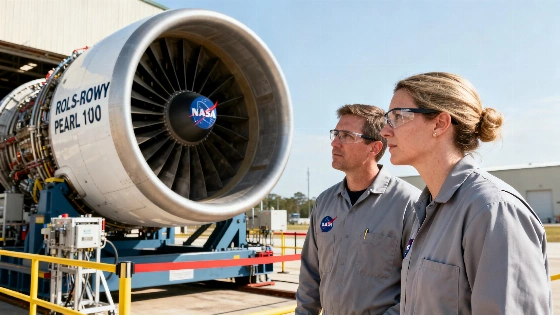
Rolls-Royce and easyJet have conducted tests in the US that could change the future of aviation: for the first time, a commercial Rolls-Royce Pearl 15 engine modified for hydrogen completed a full flight simulation cycle without a single failure. The test took place at a NASA facility in Mississippi and covered all key stages—from takeoff to landing.
During the tests, the engine ran exclusively on hydrogen, allowing engineers to verify how ready current turbines are to transition to clean fuel. The engine successfully endured the maximum loads required for takeoff, operated steadily in cruise mode, and properly completed landing procedures.
Technological breakthrough
This result is the culmination of four years of work by an international team of engineers and scientists that included specialists from the UK and Tata Consultancy Services. As noted by Interesting Engineering, the first step was taken back in 2022, when they managed to start a turboprop engine on 'green' hydrogen. Now, the technology has been tested on a jet engine, which brings it significantly closer to actual airline application.
Practical prospects
Rolls-Royce plans to use the collected data to develop engines for narrow-body aircraft—the very models that form the backbone of European short- and medium-haul air travel. This means it’s not just about laboratory prototypes but about the potential replacement of familiar airliners with more eco-friendly options.
Main obstacles
Despite successful tests, the widespread adoption of hydrogen engines is not yet possible. The main technical challenge is storing hydrogen onboard: this requires tanks that are significantly heavier and bulkier than traditional fuel systems. In addition, airports around the world are not ready to service such aircraft — infrastructure for hydrogen refueling is practically nonexistent.
What this means for passengers
For ordinary travelers, the emergence of hydrogen-powered aircraft is not a matter of the near future. The Rolls-Royce and easyJet tests prove that the technology is viable, but commercial flights still require solutions for tank weight, volume, and the development of new airport infrastructure.
According to Interesting Engineering, this step is an important milestone toward reducing aviation emissions. However, mass transition to hydrogen will only be possible once both engineering and logistical challenges are comprehensively addressed. For now, hydrogen engines remain a prospect rather than a reality for passenger flights.