Two foreign nationals spent days in Puerta de Hierro’s emergency ward. Their cases reveal how social status and nationality can affect urgent care in Madrid. Hospital staff question the system’s priorities.
Two foreign patients have spent an unusually long time in the emergency department of Madrid’s Puerta de Hierro hospital, exposing how social and administrative barriers can leave vulnerable individuals stranded in the Spanish healthcare system. Over the past two weeks, a 72-year-old Bolivian man named Carmelo and an 18-year-old Peruvian named Ángel, both without family support in Spain, remained in the emergency area far beyond the standard 24-hour target for patient transfers or discharges.
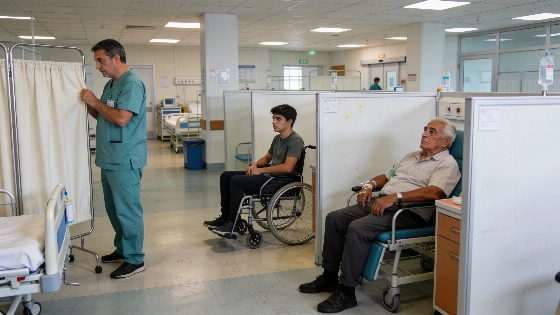
Hospital management holds daily meetings to monitor patient flow and ensure that no one stays in the emergency ward longer than necessary. Yet Carmelo, diagnosed with an aggressive, inoperable brain tumor, spent nearly six days—143 hours—among patients needing urgent interventions before being moved to a palliative care center. Ángel, who has an intellectual disability and behavioral challenges, has been in the emergency unit since July 21, with his stay surpassing 335 hours as of Tuesday, still awaiting placement in a specialized facility.
Both cases have unsettled hospital staff, some of whom believe that cost-saving motives and the patients’ foreign status contributed to the prolonged stays. According to several employees, Spanish patients in similar or worse conditions are typically transferred to regular hospital rooms or wards much faster. In contrast, Carmelo and Ángel were kept in curtained-off sections of the emergency area, without the privacy or comfort of a standard room. Staff members, speaking anonymously, suggest that the lack of family advocates and the patients’ non-Spanish nationality made it easier for the administration to delay their transfers without fear of complaints or public scrutiny.
The hospital’s spokesperson maintains that both patients received appropriate care and that their extended stays were due to their unique social circumstances, not to any attempt to cut costs. She emphasized that neither Carmelo nor Ángel required full hospital admission from a clinical perspective, and that they were kept in separate spaces with necessary medical attention. However, some staff disagree, arguing that the system’s priorities are influenced by nationality, with Spanish patients often receiving faster access to hospital beds.
Carmelo, who had legal residency and a non-contributory pension, was unable to return to Bolivia to spend his final days with family due to his rapidly deteriorating condition. After his emergency stay, he was finally transferred to La Fuenfría palliative care hospital in Cercedilla. Ángel remains in limbo, waiting for a place in a facility for adults with intellectual disabilities. The hospital says the regional social services department is handling his case, but until a solution is found, he continues to wait in the emergency unit, sometimes restrained for his own safety due to behavioral issues.
This situation highlights ongoing challenges in Spain’s healthcare system, especially for those without family or social support. While the country’s public health model is designed to provide universal care, administrative and social gaps can leave the most vulnerable at risk of being overlooked. Similar issues of vulnerable individuals falling through the cracks have been reported elsewhere, such as in the case of two homeless women who were victims of violent assaults in Barcelona, as detailed in a recent report on attacks against homeless women in Catalonia. These incidents underscore the need for more robust safeguards for those with limited resources or support networks.
Spain’s healthcare system is often praised for its accessibility and quality, but cases like those at Puerta de Hierro reveal the complexities faced by foreign nationals and socially isolated patients. The intersection of health, social services, and immigration status can create bureaucratic bottlenecks, especially when patients lack advocates. As Madrid’s population grows more diverse, such cases may become more common, raising questions about how hospitals and authorities can better coordinate to prevent vulnerable people from being left behind in emergency care settings.