Francisco Nicolás Gómez Iglesias, once known as El Pequeño Nicolás, has recovered his passport and avoided prison after a decade of legal battles. He now aims to reclaim his real name and move past his notorious alias.
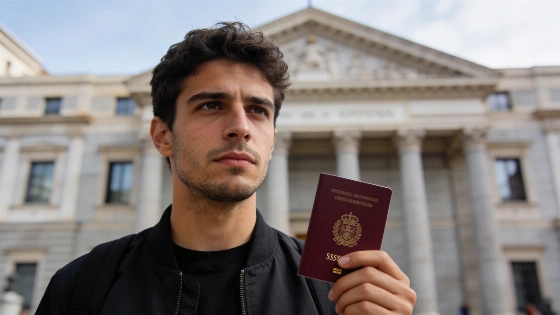
Francisco Nicolás Gómez Iglesias, who became a household name in Spain as 'El Pequeño Nicolás', has finally recovered his passport after more than ten years entangled in legal proceedings. Now 32, he is determined to reclaim not just his travel document but also his personal identity, distancing himself from the nickname that brought both fame and controversy.
Gómez Iglesias first lost his passport and, in many ways, his name at age 19, when a series of high-profile cases thrust him into the national spotlight. Over the years, he faced four separate trials, with accusations ranging from document forgery to impersonating officials and orchestrating illegal access to police databases. Despite initial sentences totaling over 12 years in prison, a combination of legal appeals and procedural delays meant he ultimately avoided serving time behind bars.
The most serious threat came from a conviction for illegally obtaining confidential police data, which initially carried a sentence of four years and three months—enough to mandate prison under Spanish law. However, the Supreme Court reduced this to two and a half years, citing excessive delays in the judicial process. Because none of his individual sentences exceeded two years and he had no record of repeat offenses, the Provincial Court agreed to suspend his prison term in exchange for a €1,800 payment and a commitment not to reoffend.
This outcome has divided public opinion. Some see it as a surprising escape from justice for a figure once linked to political circles and high-profile impersonations, while others argue that the legal pursuit of Gómez Iglesias was disproportionate to his youthful misadventures. His supporters emphasize that he was never convicted of fraud, despite frequent accusations, and point out that his legal victories were not due to special treatment—his main lawyer, Juan Carlos Navarro, notes that the law allows such suspensions for anyone meeting the criteria.
Throughout the lengthy legal saga, Gómez Iglesias maintained a visible presence in Madrid's social scene. In May, as he awaited the final court decision, he attended a live show of Línea de la Cal at the Teatro Capitol, where the audience recognized him and chanted 'Presidente, presidente.' Although he launched a subscription campaign called 'Mr. President' in 2024, promising to reveal untold stories, the initiative faded without leading to a political career. He has also been seen with figures like eurodeputy Luis Pérez, known as Alvise, and has made occasional appearances on youth-oriented podcasts and online programs.
Despite his notoriety, those close to Gómez Iglesias describe him as focused on rebuilding his life, prioritizing family and friends over public attention. For now, he has no plans to enter politics, and his main goal is to move beyond the shadow of 'El Pequeño Nicolás.' His story stands in contrast to other recent high-profile legal cases in Spain, such as the reinforced border security in Ceuta, where authorities have taken a much stricter approach to law enforcement, as seen in the recent crackdown on attempted mass crossings.
Spain's legal system allows for suspended sentences under specific conditions, particularly when offenders are not habitual criminals and sentences do not exceed two years per offense. The case of Gómez Iglesias highlights both the flexibility and the controversy inherent in these provisions. While his legal battles have ended, the debate over his legacy—and the system that enabled his release—continues to resonate in Madrid and beyond.
For context, Spain's judicial process can be lengthy, especially in complex cases involving multiple charges and appeals. The suspension of prison sentences is not uncommon for first-time offenders, provided they meet strict legal requirements. The story of Francisco Nicolás Gómez Iglesias serves as a reminder of how public perception, media attention, and legal nuance can intersect in high-profile cases, shaping both individual destinies and broader debates about justice in Spain.