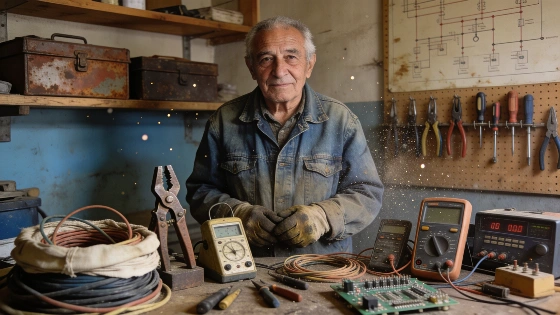
Alfredo Becerra began learning the electrical trade at 14 and spent over 35 years on the job. His career traces the evolution of materials, pay gaps, and workplace culture in Spain’s electrical sector, ending with his retirement in 2016.
At 14, Alfredo Becerra was already learning the basics of electricity, shadowing a local tradesman after school. By 16, he had joined the company where he would spend most of his working life, eventually retiring in 2016 after more than three decades in the field. His story, as reported by Talent24h, offers a rare look at how Spain’s electrical trade has transformed across generations.
In the late 1970s, entering the profession meant starting at the very bottom. Alfredo began as an apprentice, progressing through a strict hierarchy: first, second, third, and fourth-year apprentice, before passing a test to become an official tradesman. Over time, he reached the rank of first-class electrician, a position that demanded both technical skill and physical endurance.
Early in his career, Alfredo worked with materials and methods now considered obsolete. He recalls hauling heavy coils by hand, threading lines through ceilings, and using products like “tubo Bechman” and “cable de trapo”—materials that have long since disappeared from modern installations. With all wires the same color, even simple repairs could become a guessing game. Improvisation was common: some workers used beer to help cables slide through tight conduits, while Alfredo himself sometimes relied on bar soap as a lubricant. He’s quick to note that these shortcuts were a product of their time, not best practice.
As the years passed, the trade modernized. New materials, stricter safety standards, and a growing culture of knowledge-sharing began to reshape the profession. Alfredo appreciates how younger electricians now share their work and techniques on social media, a sharp contrast to the secrecy that once defined the trade. This openness, he believes, has made the job safer and more collaborative.
Wages and Workplace Realities
When Alfredo started, his first monthly wage was around 10,000 pesetas—roughly €60 at the time. The pay gap between a new helper and a skilled official was stark: a seasoned electrician could earn more than double the salary of a beginner. Today, Alfredo estimates the difference between categories has narrowed to about €100–150 per month.
There is some uncertainty about Alfredo’s final salary. While the main account puts his last official wage at €1,400 per month, a referenced headline mentions €2,100. Without further clarification, both figures remain part of his story. What is clear is Alfredo’s guiding principle: “I always preferred to have my entire salary on the books to ensure a good pension.” For him, transparency in pay was not just about income, but about long-term security.
Changing Culture on the Job
Workplace camaraderie was central to Alfredo’s experience. Nicknamed “León” by his colleagues, he remembers how the team would gather every Thursday for a beer after work, a tradition that strengthened bonds beyond the job site. This sense of trust, he says, made even the toughest assignments more manageable.
Despite the physical demands and the lure of his father’s trucking profession, Alfredo never regretted his choice. He watched the trade evolve from manual labor and makeshift solutions to a more technical, regulated, and open field. The job still demands expertise and teamwork, but the tools and culture have changed dramatically.
Context and Broader Trends
Alfredo’s story echoes broader shifts in Spain’s skilled trades. Rising costs, new regulations, and the push for formal employment contracts have changed the landscape for electricians and other workers. For example, the cost of rewiring an older home has soared in recent years, with some projects now exceeding €6,000, as detailed in a recent analysis of renovation expenses. These changes highlight the growing complexity—and value—of skilled labor in Spain’s modern economy.
Alfredo’s career, marked by adaptation and a commitment to doing things by the book, offers a window into the realities behind the numbers. His experience underscores how much the trade has changed, and how much still depends on the people who do the work.