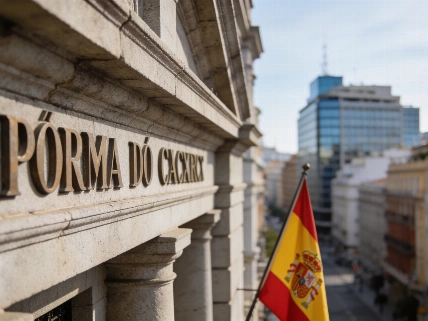
Government sharply increases minimum contributions for over a million self-employed. Starting in 2026, the minimum contribution base for self-employed founders and family employees will rise to €1,424.40. This will increase monthly payments to €448 and could lead to debts for those who do not update their payments.
Starting from January 2026, over a million self-employed workers in Spain will face a sharp increase in mandatory contributions: the minimum base for self-employed co-founders and family members working in a business will immediately rise by 42.4%. Instead of the previous €1,000 per month, they will now have to pay contributions based on €1,424.40, which automatically increases the monthly payment to about €448.
The changes are set out in the official publication — Orden PJC/297/2026, and apply only to those who have so far paid at the minimum rate. For those already contributing more, the amount will not change. However, for the majority affected, this means an additional burden of €135 per month or €1,620 per year.
Who will be affected by the increase
The new rules apply to self-employed co-founders and family employees registered under the special self-employment regime. According to Talent24h, this concerns more than one million people. Many of them have not received personal notifications and continue paying at the old rate, which can result in accumulating debt to the Seguridad Social.
How the contribution amount will change
Previously, the minimum monthly payment was about €314, but now it will increase to €448. For those who do not update their base, by the end of the year the debt could reach €1,620, and in three months — €405. There are few options: either voluntarily raise the base to €1,424.40, or wait for an automatic adjustment and a lump-sum payment of the entire amount.
Reasons and consequences
The basis for the changes was the reform of the contribution system based on actual income, adopted in Real Decreto-ley 13/2022. Under the new rules, the base for this category of self-employed cannot be lower than that of Group 7 employees in the general regime. As a result, many entrepreneurs found themselves facing increased expenses, with no support or clarification from the government.
Reaction and criticism
In the professional community, the decision sparked sharp criticism. The Association of Self-Employed Workers called the increase disproportionate, and many entrepreneurs note that with current incomes and rising expenses, running a business is becoming increasingly difficult. Cases like that of 29-year-old Zigor, who works 18-hour days for a net profit of €270, are becoming ever more typical.
What to do and how to avoid debt
Experts advise not to delay updating your base and to carefully monitor changes in the contribution system. If your payments have not been adjusted since January, debt has already started to accrue. It's important to remember that similar changes can occur in other areas too: for example, switching your gas tariff and adjusting heating can save up to 20% without investment, as detailed in the article on legal ways to lower your gas bill in Spain.
In the coming months, contributions for the self-employed are expected to remain one of the most pressing issues on the country's economic agenda. For many entrepreneurs, timely adjustment of payments is becoming not just a financial matter, but one of business survival.