Carlos García Roldán, convicted of defrauding 240 buyers in Mallorca, was arrested after months on the run. Police found him hiding in a kitchen cabinet at his mother’s home. The case reveals the scale of real estate fraud in Spain.
The biggest real estate fraud case in Balearic Islands history ended not with a dramatic escape abroad, but with Carlos García Roldán—known as Charly—curled up inside a kitchen cabinet under his mother’s sink in Calella. After months on the run, the Guardia Civil arrested him, closing a manhunt that had dragged on since December. According to La Vanguardia and Última Hora, police caught up with him on September 10, 2026, after he failed to appear for sentencing late last year.
García Roldán had been sentenced to nearly 15 years in prison for running a €3.3 million scam that targeted 240 people hoping to buy homes. Through his agency, Lujocasa, he took deposits from buyers—sometimes as much as €100,000—promising new homes in Mallorca that never existed. The money disappeared into luxury cars, jewelry, travel, and almost €270,000 lost at the Casino de Mallorca. Reports confirm Lujocasa never owned land, permits, or financing for any of the promised developments, making this the largest real estate fraud ever recorded in the Balearics.
The arrest warrant for García Roldán was issued in December 2025 after he failed to appear for notification of his sentence and to begin serving his prison term.
Police told EL PAÍS they had suspected the Calella apartment for some time, but García Roldán never left the building, making surveillance difficult. Relatives ran all errands while he stayed hidden, determined not to repeat the mistakes that led to his earlier arrest in Colombia in 2019. Back then, his routines and a tip from his girlfriend gave him away, and Spanish and Colombian police coordinated to detain him.
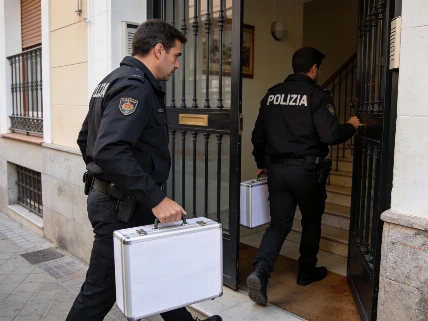
This time, a solid tip came in on Thursday morning. The Guardia Civil got a judge’s approval and raided the apartment at dawn. They found García Roldán wedged under the kitchen sink—a hiding spot that showed just how desperate he was to avoid arrest. He was taken straight to the Arenys de Mar barracks and is expected to appear before a judge within hours. Última Hora reports that this transfer was a routine step before his court hearing.
The court found that Lujocasa never had the means or money to build any homes. The whole operation was set up to funnel millions to its organizers. Along with García Roldán, other agents and an architect were ordered to pay over €2 million in damages to more than a hundred victims. El Caso reports that about 240 families were affected, making the Lujocasa case unprecedented in the region.
In addition to his recent arrest, García Roldán was previously detained in Colombia in 2019, illustrating a long history of evasion and international pursuit by Spanish authorities. His latest capture is seen as the culmination of years of investigative work and cross-border cooperation.
La Vanguardia
This isn’t the first time Spanish police have had to track down fraudsters who use family networks and legal loopholes to stay hidden. In the case of José Trinidad Márquez, repeat offenders have managed to delay justice for years, making life harder for both law enforcement and victims.
The Mallorca scam’s size and boldness have shaken Spain’s real estate sector. With over 240 families affected and millions lost, the case shows how vulnerable buyers can be when oversight fails. García Roldán’s months in hiding, helped by relatives and extreme measures, point to ongoing gaps in Spain’s enforcement system. Until consequences for these crimes are swift and certain, fraudsters will keep pushing the limits—and ordinary people will keep paying the price.