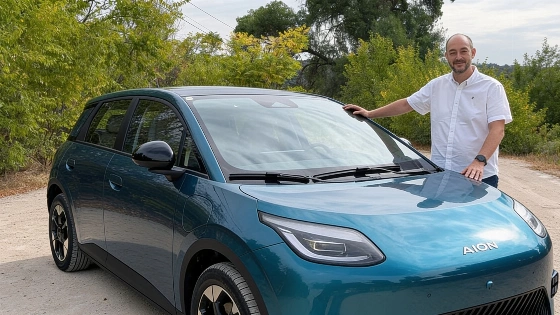
The GAC AION UT arrives in Spain with 204 horsepower and a promise of more space and equipment for less money. Designed in Milan and assembled in Austria, this electric compact targets rivals like the BYD Dolphin with a distinctly European approach.
GAC has landed in Spain with the AION UT. This is a 204-horsepower electric compact, but it is not just another Chinese import. The car was designed in Milan and put together in Austria. GAC is not hiding its intentions. The AION UT is here to take on the BYD Dolphin and other rivals. Price is only part of the story. GAC is betting on more space, more features, and a European feel.
Most Chinese brands send over their home-market models. GAC took a different route. The AION UT was shaped in the company’s Milan design studio. There are no aggressive grilles or sharp creases. The look is clean and simple. The LED headlights are shaped like owl eyes. The rear is plain, maybe too plain for some. The car measures 4,270 mm long with a 2,750 mm wheelbase. That puts it between a supermini and a C-segment hatch. The real surprise is inside.
The AION UT received the Best Exterior Design award at the 2026 Torino Automotive Design Award, highlighting its focus on European styling.
Step inside and space jumps out. The cabin feels open and bright. Buyers can pick two-tone or all-black interiors. Synthetic leather covers the main touchpoints. The materials feel solid. Harder plastics show up lower down, but the overall quality beats the price tag. Even the base Premium trim packs electric front seats, a heat-pump climate system, 360° cameras, parking sensors, and full LED lighting. The Luxury version adds a panoramic glass roof, electric tailgate, cooled wireless phone charging, and a rare feature: both front seats can recline flat to make a lounge.
The dashboard is all about minimalism. A floating 14.6-inch touchscreen runs almost everything. Physical buttons are nearly gone. Even simple tasks like changing the climate settings mean digging through menus. The interface is less confusing than some Chinese rivals, but the Spanish translations can be awkward. There is a learning curve. Wireless Apple CarPlay and Android Auto are included. An 8.8-inch digital cluster shows the basics.
Rear seat space is where the AION UT pulls ahead. The flat floor and smart layout mean two tall adults can stretch out in the back. There is enough headroom, even with the glass roof. The middle seat is tighter but usable. Wide-opening doors make getting in and out easy. The boot holds 440 liters. There is a low loading lip and a hidden spot for cables. Fold the rear seats and the space grows to 1,600 liters. There is no front trunk.
According to official GAC press releases and coverage in the Spanish business press, the AION UT for Spain is equipped with a 60 kWh LFP battery, offering up to 430 km WLTP range and 620 km in city driving. The model is positioned as a regionally adapted version, with European logistics coordinated from Amsterdam and spare parts supplied via Rotterdam.
On the road, the AION UT feels smooth and comfortable. The 150 kW (204 CV) motor and 60 kWh LFP battery give quick acceleration. It goes from 0 to 100 km/h in 7.3 seconds. Top speed is 160 km/h. GAC points to its Magazine Battery 2.0 safety tech, which is designed to stop thermal runaway even in tough conditions. In city driving, the car feels lively and efficient. Early test drives show energy use below 13 kWh/100 km in mixed driving. The official figure is 16.4 kWh/100 km for up to 430 km of range. Urban cycles can stretch to 620 km, but real-world numbers will vary.
Comfort comes first. The suspension uses MacPherson struts up front and a torsion beam at the rear. It handles bumps and cobbles without drama. The steering is light and easy in the city. At higher speeds, it feels vague and lacks precision. There are three levels of regenerative braking. Changing them means going into the touchscreen menus every time. Driver assistance systems are included, but they can be too eager. Alerts pop up often and take several taps to silence. That will annoy some drivers.
Charging is the weak spot. Home charging at 11 kW AC is simple. DC fast charging maxes out at 87 kW. That is slower than key rivals. The car does have Vehicle-to-Load (V2L) capability, so owners can power devices up to 3.3 kW. But if you want fast top-ups on long trips, the charging speed may disappoint.
GAC is going after rivals on price. The AION UT starts at €22,945 for the Premium trim. The Luxury version is €24,995. These prices include brand discounts and the Plan Auto+ incentive. The car comes with an 8-year or 160,000 km warranty. Against the BYD Dolphin, KIA EV3, and Volkswagen ID.3, the AION UT stands out for rear seat space, boot size, and standard features. The trade-offs are clear. DC charging is slower. The touchscreen controls almost everything. The steering could be sharper.
Spain’s electric car market is shifting. Established brands face new rivals and changing buyer demands. Ford’s recent struggles, as reported earlier, show the pressure on legacy automakers to adapt. GAC’s European-built AION UT is a calculated bet. The company thinks Spanish buyers want more space and features for less money, even if that means living with some quirks in usability and charging.
The AION UT does not chase headlines with wild specs or futuristic looks. It offers comfort, practicality, and value. The package feels more European than Chinese. For buyers who care about space, features, and price more than fast charging or sporty handling, the AION UT is a strong new option. It is honest about what it offers. That could shake up Spain’s crowded electric compact market.