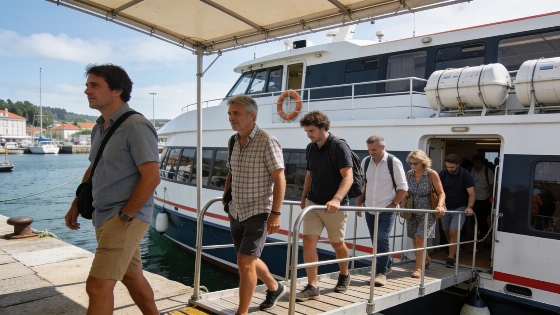
Laureano Oubiña planned a paid tour retracing his smuggling routes in Galicia. The Xunta has launched a sanction, calling the project illegal. The move highlights tensions over tourism and regional image.
The Xunta de Galicia has intervened to stop a new tourism venture led by Laureano Oubiña, the well-known former smuggler and ex-convict, who intended to guide paying passengers along the same maritime routes he once used for tobacco and hashish trafficking. The regional government has initiated a sanctioning process, arguing that the planned tour violates current tourism regulations and damages Galicia’s reputation.
Oubiña, now 80, had nearly filled the 150 available spots for his one-day “Ruta del contrabando y narcotráfico” boat trip through the ría de Arousa. Passengers, including families with minors, were to pay €189 each to hear first-hand accounts of his smuggling operations, from the logistics of unloading contraband to evading law enforcement. The tour was set to depart from O Grove, stop at the island of Ons, and finish in Ribeira, covering key points where Oubiña’s operations took place in the 1970s and 1980s.
The Xunta’s Tourism Office, however, determined that the activity constitutes a package tour, which under Galician law can only be organized by a licensed travel agency. The sanctioning file, directed at Oubiña’s company Pejurito S.L.U., also states that the initiative harms the region’s image by associating Galicia with notorious criminal events, undermining decades of work to promote quality tourism. Oubiña now has less than a month to regularize his business or face penalties.
Despite the legal setback, Oubiña remains undeterred, insisting he will continue to pursue new projects. He has previously published books, marketed albariño wine, and sold merchandise referencing his criminal past. For the tour, he had arranged for a local ferry operator to divert from its usual route to the island of Ons and instead retrace the clandestine paths once used for large-scale smuggling. Oubiña planned to narrate the journey in detail, describing how shipments of up to 15 tons of hashish and thousands of boxes of tobacco were covertly landed with the help of local sand barges.
The controversy comes at a time when Galicia is seeking to reinforce its image as a destination for high-quality, family-friendly tourism. The regional government’s response reflects broader concerns about the impact of unconventional tourism offerings on local branding. Similar debates have emerged elsewhere in Spain, especially as regions balance economic opportunity with reputational risk. In Madrid, for example, authorities recently faced a different kind of crisis as a massive wildfire forced thousands to evacuate, highlighting the challenges of managing both tourism and public safety in high-profile regions. Details on that emergency can be found in this report on the Madrid wildfire evacuations.
Oubiña has indicated that, if successful, he would expand the tours to other parts of Galicia and even Portugal, reconstructing his criminal history for a paying audience. His plans also include a possible route tracing his 13-month escape from Spanish authorities, which ended with his arrest in Greece. The case underscores ongoing tensions in Spain over how to handle the legacy of high-profile criminals and the boundaries of commercializing notorious pasts. According to available data, Galicia has invested heavily in repositioning itself as a premium tourism destination, with the sector contributing significantly to the regional economy. The outcome of this dispute may set a precedent for how similar ventures are regulated in the future.